
GCSE Chemistry (AQA)
196 videos | 19 hours
Please subscribe to watch this video.
This, and all other videos, are included in our premium subscriptions.
Premium accounts get access to all videos.
Enable autoplay to keep watching
Your browser is blocking videos from playing automatically. To turn it back on:
Safari (Mac): Click the Safari menu item in the top bar, then Settings → Websites → Auto-Play, then set Auto-Play to Allow All Auto-Play for the current website.
Safari (iPhone/iPad): open the Settings app, then Apps → Safari → Auto-Play, and select Allow All Auto-Play.
Limiting Reactants
- Reactions often involve two or more reactants.
- Symbol equation represents a simple combustion reaction.
- Carbon reacts with oxygen to produce carbon dioxide.
- Excess of one reactant ensures the other is used up.
- Amount of carbon dioxide depends on the amount of each reactant.
- Oxygen gas is naturally found in the air.
- Each mole of carbon reacts with one mole of oxygen to produce one mole of carbon dioxide.
- Carbon is eventually used up, leaving oxygen in excess.
- Limiting reactant is the reactant completely used up, limiting product formation.
- Carbon is the limiting reactant in the combustion reaction.
- To find the limiting reactant, compare the number of moles of reactants to the balanced equation ratios.
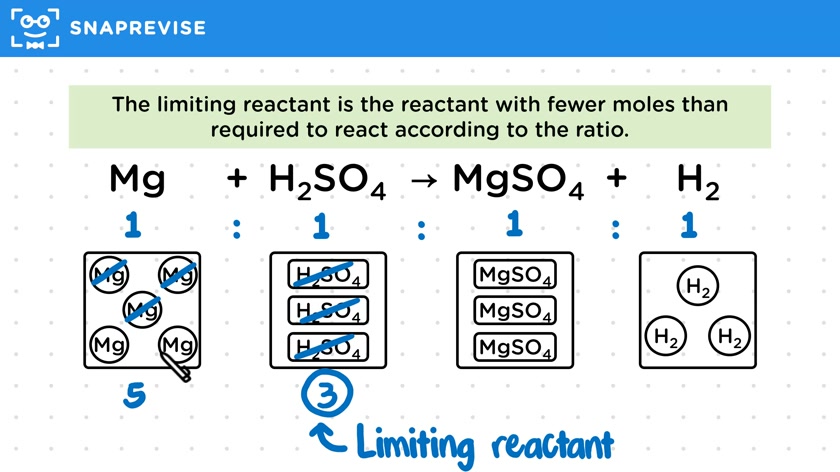
- Example: Magnesium reacts with sulfuric acid to produce salt and hydrogen gas.
- Balanced equation shows a 1:1:1 mole ratio.
- If there are 5 moles of magnesium and 3 moles of sulfuric acid, sulfuric acid is the limiting reactant.
- Sulfuric acid limits the amount of product made.
- Magnesium is in excess, with some left over after the reaction.
- In exams, identifying limiting reactants is necessary.
- Example: N2 + 3H2 reacts to form 2NH3.
- Given 0.50 moles of nitrogen and 1.75 moles of hydrogen.
- Step 1: Identify the ratio between reactants (1:3).
- Step 2: Pick the easiest reactant to work with (nitrogen).
- Step 3: Calculate moles of the other reactant needed (0.5 moles of nitrogen needs 1.5 moles of hydrogen).
- Step 4: Identify the limiting reactant (nitrogen is the limiting reactant, hydrogen is in excess).
Please subscribe to access these revision notes.
This, and all other video notes, are included in our premium subscriptions.
Premium accounts get access to all videos and revision notes.
19
questions for Quantitative chemistry
13
questions for Use of amount of substance in relation to masses of pure substances