
GCSE Chemistry (AQA)
196 videos | 19 hours
Please subscribe to watch this video.
This, and all other videos, are included in our premium subscriptions.
Premium accounts get access to all videos.
Enable autoplay to keep watching
Your browser is blocking videos from playing automatically. To turn it back on:
Safari (Mac): Click the Safari menu item in the top bar, then Settings → Websites → Auto-Play, then set Auto-Play to Allow All Auto-Play for the current website.
Safari (iPhone/iPad): open the Settings app, then Apps → Safari → Auto-Play, and select Allow All Auto-Play.
Metals vs Non Metals
- Majority of elements are metals.
- Metals are located to the left and towards the bottom of the periodic table.
- Metals are shown in yellow on the periodic table, left of the stair step line.
- Around three-quarters of all elements are metals.
- Non-metals are found on the right of the periodic table, shown in blue.
- Non-metals exist at the top right above the stair step dividing line.
- Typical solid metals are good conductors of electricity and heat, have high melting points, are shiny, malleable, ductile, and have high density.
- Copper is used for wires due to its conductivity and ductility.
- Gold is used for rings because it is shiny.
- Aluminum sheets are used in engineering for their malleability.
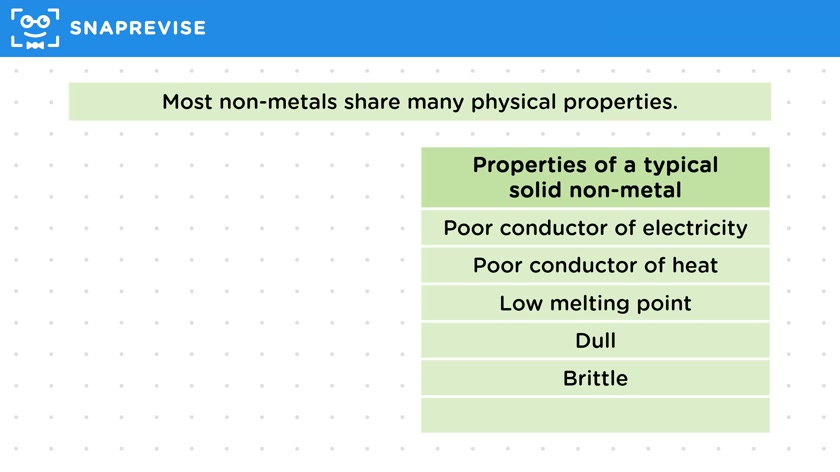
- Typical solid non-metals are poor conductors of electricity and heat, have low melting points, are dull, brittle, and have low density.
- Sulfur, phosphorus, and iodine are examples of non-metals with these properties.
- Metals and non-metals have contrasting properties; metals are shiny and conductive, non-metals are dull and non-conductive.
- Chemically, metals have fewer electrons in their outer shell and tend to lose them easily.
- Sodium is an example of a metal with one electron in its outer shell, forming a sodium plus ion when it loses it.
- Non-metals have more electrons in their outer shell and tend to share or gain electrons.
- Chlorine is an example of a non-metal with seven electrons in its outer shell, forming a CL minus ion when it gains an additional electron.
Please subscribe to access these revision notes.
This, and all other video notes, are included in our premium subscriptions.
Premium accounts get access to all videos and revision notes.
60
questions for Atomic structure and the periodic table
5
questions for The periodic table