
GCSE Chemistry (AQA)
196 videos | 19 hours
Please subscribe to watch this video.
This, and all other videos, are included in our premium subscriptions.
Premium accounts get access to all videos.
Enable autoplay to keep watching
Your browser is blocking videos from playing automatically. To turn it back on:
Safari (Mac): Click the Safari menu item in the top bar, then Settings → Websites → Auto-Play, then set Auto-Play to Allow All Auto-Play for the current website.
Safari (iPhone/iPad): open the Settings app, then Apps → Safari → Auto-Play, and select Allow All Auto-Play.
Potable Water
- Water of appropriate quality is essential for life.
- Potable water is safe for human consumption.
- Tap water and bottled water are examples of potable water.
- Drinking directly from the ocean is non-potable and unsafe.
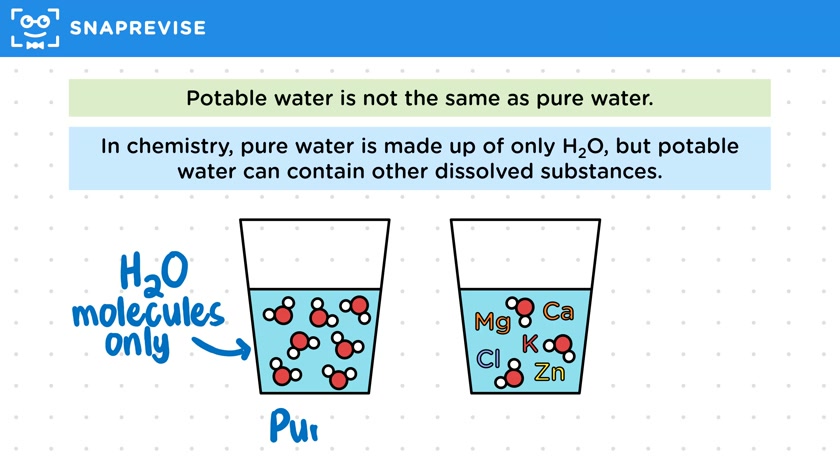
- Potable water is not the same as pure water.
- Pure water contains only H2O, while potable water can have dissolved substances.
- Potable water can contain dissolved salts and minerals.
- Tap water and many types of spring and bottled water have minerals dissolved in them.
- For water to be potable, it must satisfy certain conditions:
- It should have a neutral pH (not too acidic or too alkaline).
- It should have low levels of dissolved salts and microbes.
- Salty water can dehydrate and damage organs.
- Microbes in water can cause harmful diseases.
Please subscribe to access these revision notes.
This, and all other video notes, are included in our premium subscriptions.
Premium accounts get access to all videos and revision notes.
18
questions for Using resources
3
questions for Using the Earth's resources and obtaining potable water