
GCSE Chemistry (AQA)
196 videos | 19 hours
Please subscribe to watch this video.
This, and all other videos, are included in our premium subscriptions.
Premium accounts get access to all videos.
Enable autoplay to keep watching
Your browser is blocking videos from playing automatically. To turn it back on:
Safari (Mac): Click the Safari menu item in the top bar, then Settings → Websites → Auto-Play, then set Auto-Play to Allow All Auto-Play for the current website.
Safari (iPhone/iPad): open the Settings app, then Apps → Safari → Auto-Play, and select Allow All Auto-Play.
Producing Potable Water
- In the UK, potable water is obtained by filtering and cleaning rainwater.
- Potable water is safe to drink, not necessarily pure, with neutral pH and low levels of salts and microbes.
- Water cycle: water evaporates, forms clouds, and falls as rain, collecting in the ground, lakes, rivers, or as groundwater.
- Rainwater is fresh water with low levels of dissolved substances.
- Fresh water has fewer solutes compared to salt water, making it potable.
- Potable water production involves three major steps:
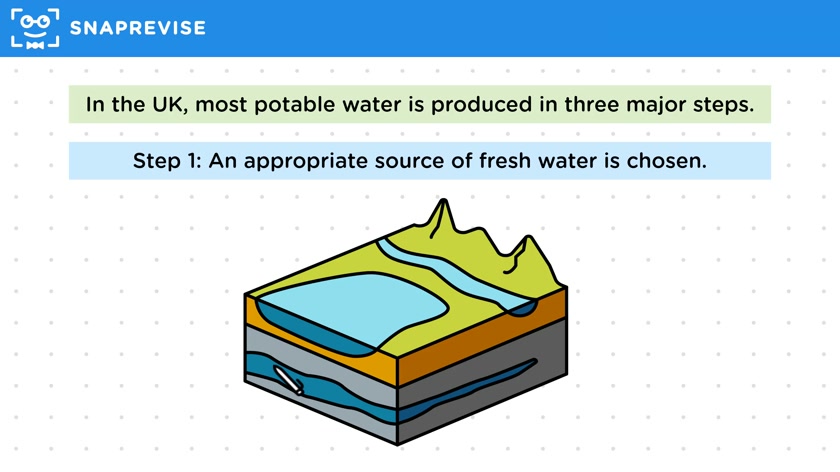
- 1. Choosing an appropriate source of fresh water (rivers, lakes, or groundwater) based on availability, proximity, and chemical content.
- 2. Filtering water through filter beds to remove insoluble substances.
- 3. Sterilizing water to kill harmful microbes using chlorine, ozone, or ultraviolet light.
- Filter beds consist of layers of sand and gravel to remove insoluble particles.
- Sterilization involves adding sterilizing agents like chlorine, ozone, and exposing water to UV light.
- Sterilized water is bottled or sent to taps for consumption.
Please subscribe to access these revision notes.
This, and all other video notes, are included in our premium subscriptions.
Premium accounts get access to all videos and revision notes.
18
questions for Using resources
3
questions for Using the Earth's resources and obtaining potable water