
GCSE Chemistry (AQA)
196 videos | 19 hours
Please subscribe to watch this video.
This, and all other videos, are included in our premium subscriptions.
Premium accounts get access to all videos.
Enable autoplay to keep watching
Your browser is blocking videos from playing automatically. To turn it back on:
Safari (Mac): Click the Safari menu item in the top bar, then Settings → Websites → Auto-Play, then set Auto-Play to Allow All Auto-Play for the current website.
Safari (iPhone/iPad): open the Settings app, then Apps → Safari → Auto-Play, and select Allow All Auto-Play.
The Size of Particles
- Particles are very small compared to visible objects.
- Big Ben is approximately 100 meters tall, an adult human is about 1.8 meters tall, and a football is about 0.2 meters in diameter.
- The thickness of a human hair is about 0.05 millimeters or five times 10 to the minus five meters.
- An atomic radius is much smaller at one times 10 to the minus 10 meters.
- A human hair is around 500,000 times bigger than an atom.
- Particulate matter refers to tiny solid or liquid particles in the air, often emitted by factories.
- Particulate matter (PM) can be toxic if inhaled or ingested.
- Three-quarters of all PM is from human activities like factories and cars.
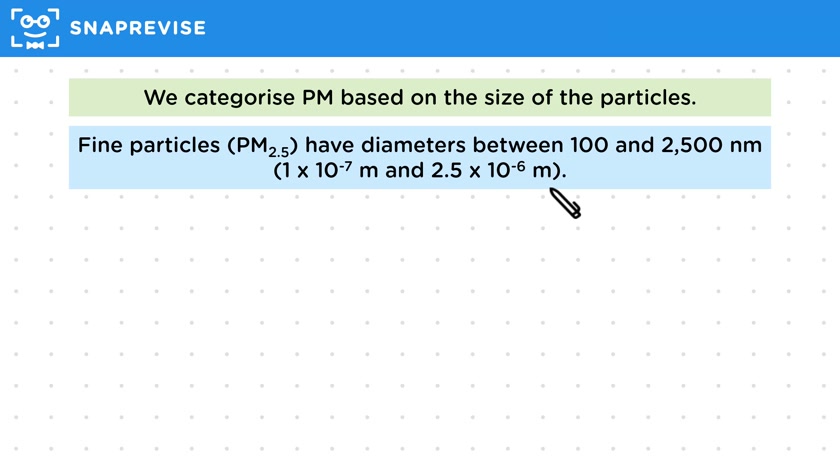
- PM is categorized by particle size:
- Fine particles (PM 2.5) have diameters between 102,500 nanometers and 2.5 times 10 to the minus six meters.
- Coarse particles (PM 10) have diameters between 2,510,000 nanometers and 2.5 times 10 to the minus six meters.
- Nanoparticles are smaller than particulate matter, with diameters of one to 100 nanometers.
- An example of a nanoparticle is a fullerene.
- Size comparison:
- An atom has a diameter of around 0.2 nanometers.
- Nanoparticles range from one to 100 nanometers.
- Fine particles (PM 2.5) range from 102,500 nanometers.
- Coarse particles (PM 10) range from 2,510,000 nanometers.
- A sheet of paper is 100,000 nanometers thick, illustrating the small size of these particles.
Please subscribe to access these revision notes.
This, and all other video notes, are included in our premium subscriptions.
Premium accounts get access to all videos and revision notes.
40
questions for Bonding, structure, and the properties of matter
12
questions for Bulk and surface properties of matter including nanoparticles (chemistry only)