
GCSE Chemistry (AQA)
196 videos | 19 hours
Please subscribe to watch this video.
This, and all other videos, are included in our premium subscriptions.
Premium accounts get access to all videos.
Enable autoplay to keep watching
Your browser is blocking videos from playing automatically. To turn it back on:
Safari (Mac): Click the Safari menu item in the top bar, then Settings → Websites → Auto-Play, then set Auto-Play to Allow All Auto-Play for the current website.
Safari (iPhone/iPad): open the Settings app, then Apps → Safari → Auto-Play, and select Allow All Auto-Play.
Using Earth's Resources
- Humans use earth's resources for warmth, shelter, food, and transport.
- Natural resources are supplemented by agriculture to produce fuels, clothing, and construction materials.
- Chemistry improves agricultural and industrial processes and replaces natural products with synthetic ones.
- Synthetic fertilizers, derived from ammonia, enhance crop productivity.
- Clothing has shifted from natural fibers to synthetic fibers like polyester, saving resources.
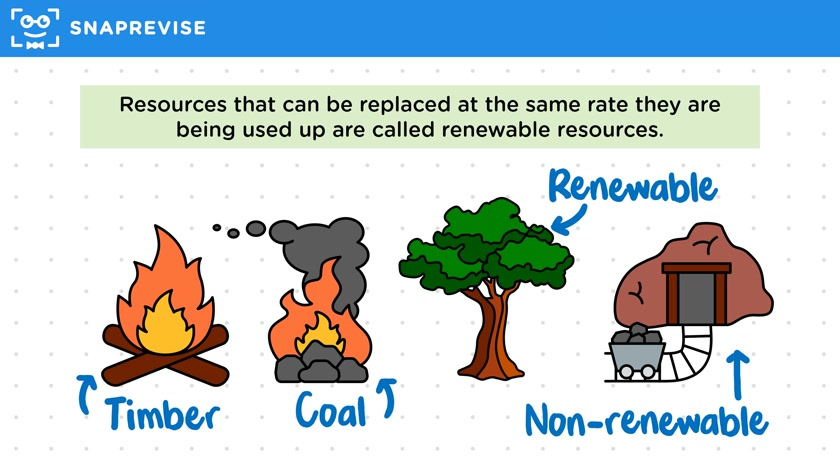
- Finite resources, such as fossil fuels and metals, are being depleted faster than they can be replaced.
- Renewable resources, like timber, can be replenished at the rate they are used.
- Data helps track resource usage and sustainability.
- Chemistry contributes to sustainable development by finding alternatives to finite resources.
- Bioplastics, made from corn starch and microorganisms, offer a renewable alternative to traditional plastics.
Please subscribe to access these revision notes.
This, and all other video notes, are included in our premium subscriptions.
Premium accounts get access to all videos and revision notes.
18
questions for Using resources
3
questions for Using the Earth's resources and obtaining potable water