
GCSE Combined Science (AQA)
622 videos | 38 hours
Please subscribe to watch this video.
This, and all other videos, are included in our premium subscriptions.
Premium accounts get access to all videos.
Enable autoplay to keep watching
Your browser is blocking videos from playing automatically. To turn it back on:
Safari (Mac): Click the Safari menu item in the top bar, then Settings → Websites → Auto-Play, then set Auto-Play to Allow All Auto-Play for the current website.
Safari (iPhone/iPad): open the Settings app, then Apps → Safari → Auto-Play, and select Allow All Auto-Play.
Adaptations
- Adaptations are features that enable organisms to survive in their natural environments.
- These adaptations allow organisms to outcompete others and can lead to evolution.
- The concept of evolution related to adaptations is covered elsewhere in the course.
- Students need to understand and explain the categories of adaptations in exams.
- Categories of adaptations include structural, behavioral, and functional adaptations.
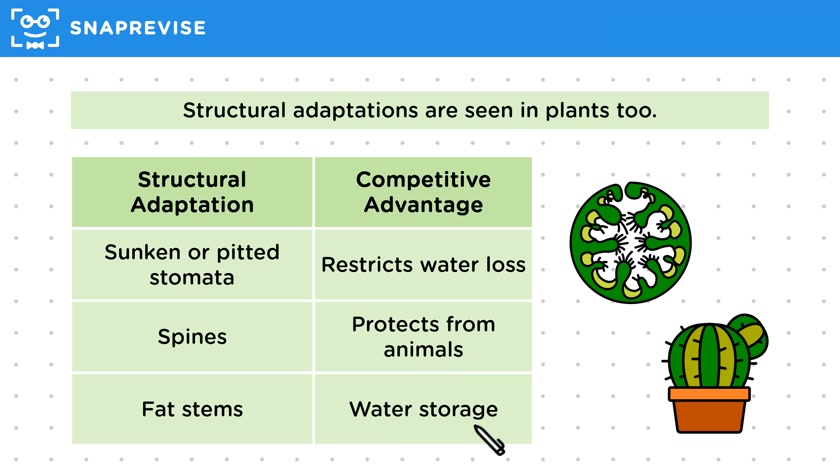
- Structural adaptations are physical features like sharp claws in lynxes, which help in hunting and climbing.
- Examples of structural adaptations in plants include sunken stomata in marram grass to reduce water loss and spines in cacti for protection.
- Behavioral adaptations include mating rituals like peacocks displaying feathers and tool use by chimpanzees for feeding.
- Functional adaptations involve natural body functions such as secretion of poison in cane toads for defense and hibernation in hedgehogs to conserve energy during winter.
- Students need to be familiar with these adaptation types but specific examples are not required for the exam.
Please subscribe to access these revision notes.
This, and all other video notes, are included in our premium subscriptions.
Premium accounts get access to all videos and revision notes.
18
questions for Ecology
3
questions for Adaptations, Interdependence and Competition