
GCSE Combined Science (AQA)
622 videos | 38 hours
Please subscribe to watch this video.
This, and all other videos, are included in our premium subscriptions.
Premium accounts get access to all videos.
Enable autoplay to keep watching
Your browser is blocking videos from playing automatically. To turn it back on:
Safari (Mac): Click the Safari menu item in the top bar, then Settings → Websites → Auto-Play, then set Auto-Play to Allow All Auto-Play for the current website.
Safari (iPhone/iPad): open the Settings app, then Apps → Safari → Auto-Play, and select Allow All Auto-Play.
Adrenaline
- Adrenaline is a hormone produced by the adrenal glands located on top of the kidneys.
- It is released in response to fear or stress, such as encountering a lion.
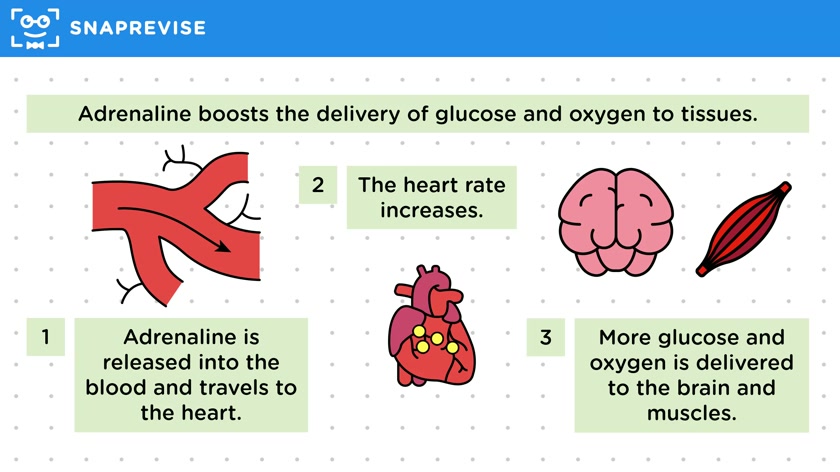
- Adrenaline increases the delivery of glucose and oxygen to tissues.
- When released into the blood, adrenaline travels to the heart, causing an increase in heart rate.
- This results in a greater volume of blood being pumped, enhancing the delivery of glucose and oxygen to the brain and muscles.
- The increased glucose and oxygen improve the functioning of the brain and muscles.
- This process allows for faster and stronger reactions to danger.
- The body's response to adrenaline is known as the "fight or flight" response, which prepares one to either confront or flee from threats.
- This response was vital for survival in ancient times but may not always be beneficial in modern non-physical challenges, such as taking an exam.
Please subscribe to access these revision notes.
This, and all other video notes, are included in our premium subscriptions.
Premium accounts get access to all videos and revision notes.
95
questions for Homeostasis and Response
72
questions for Hormonal Coordination in Humans