
GCSE Combined Science (AQA)
622 videos | 38 hours
Please subscribe to watch this video.
This, and all other videos, are included in our premium subscriptions.
Premium accounts get access to all videos.
Enable autoplay to keep watching
Your browser is blocking videos from playing automatically. To turn it back on:
Safari (Mac): Click the Safari menu item in the top bar, then Settings → Websites → Auto-Play, then set Auto-Play to Allow All Auto-Play for the current website.
Safari (iPhone/iPad): open the Settings app, then Apps → Safari → Auto-Play, and select Allow All Auto-Play.
Antibiotic Resistance
- Mutations of bacterial pathogens can produce new strains.
- Strains are variants of a bacterial species with different phenotypes.
- Diagram illustrates strain A of a bacterium mutating into strain B with a slightly different phenotype.
- Different strains are genetic variants.
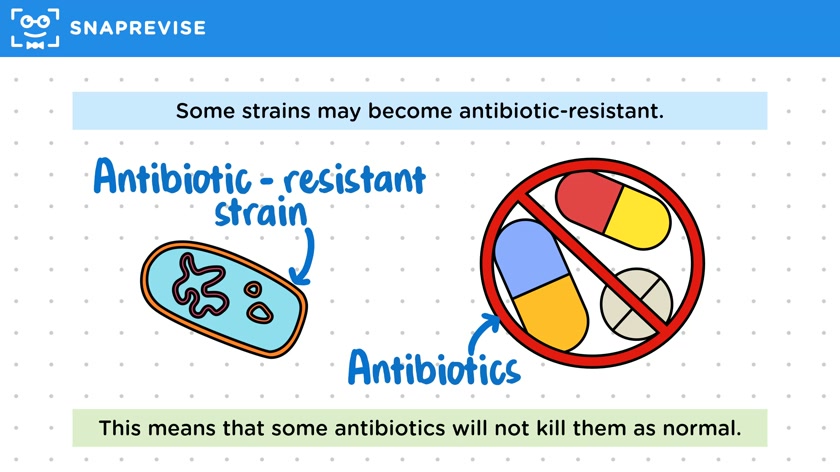
- Some strains may become antibiotic resistant.
- Antibiotic-resistant strains can produce mechanisms to protect against antibiotics.
- As a result, some antibiotics will not effectively kill these bacteria.
- Bacteria may no longer be killed by common antibiotics like penicillin, necessitating different or new antibiotics.
- Developing new medication is a lengthy process.
- Antibiotic resistance should be understood for exams.
- Antibiotic-resistant bacteria can spread and cause severe illnesses without effective treatments.
- Resistance strains spread easily as people aren't immune to them and lack effective antibiotics.
- It's crucial to prevent the spread of these resistant strains.
- For exams, understanding the importance of antibiotics and the concerns of antibiotic resistance is essential.
Please subscribe to access these revision notes.
This, and all other video notes, are included in our premium subscriptions.
Premium accounts get access to all videos and revision notes.
81
questions for Inheritance, Variation and Evolution
24
questions for The Development of Understanding of Gentics and Evolution