
GCSE Combined Science (AQA)
622 videos | 38 hours
Please subscribe to watch this video.
This, and all other videos, are included in our premium subscriptions.
Premium accounts get access to all videos.
Enable autoplay to keep watching
Your browser is blocking videos from playing automatically. To turn it back on:
Safari (Mac): Click the Safari menu item in the top bar, then Settings → Websites → Auto-Play, then set Auto-Play to Allow All Auto-Play for the current website.
Safari (iPhone/iPad): open the Settings app, then Apps → Safari → Auto-Play, and select Allow All Auto-Play.
Atmospheric Pollutants from Fuels
- Combustion of fuels is a major source of atmospheric pollutants.
- Fuels release energy by reacting with oxygen during burning.
- Types of fuels include fossil fuels (coal, natural gas), refined forms (propane, petrol), and wood.
- Burning fuels releases gases, some of which are atmospheric pollutants.
- Most fuels contain carbon and hydrogen, and may contain sulfur.
- Coal contains carbon-based compounds, hydrogen, sulfur, oxygen, and nitrogen.
- Burning coal releases various gases, including carbon dioxide, carbon monoxide, water vapor, sulfur dioxide, and nitrogen oxides.
- Solid particles and unburned hydrocarbons form particulates like soot, which stains chimneys and makes smoke black.
- Gases produced during burning are colorless; soot is composed of carbon particulates.
- Fuels burn by reacting with oxygen, producing different products based on the fuel's composition.
- Hydrogen in fuels burns to produce water vapor.
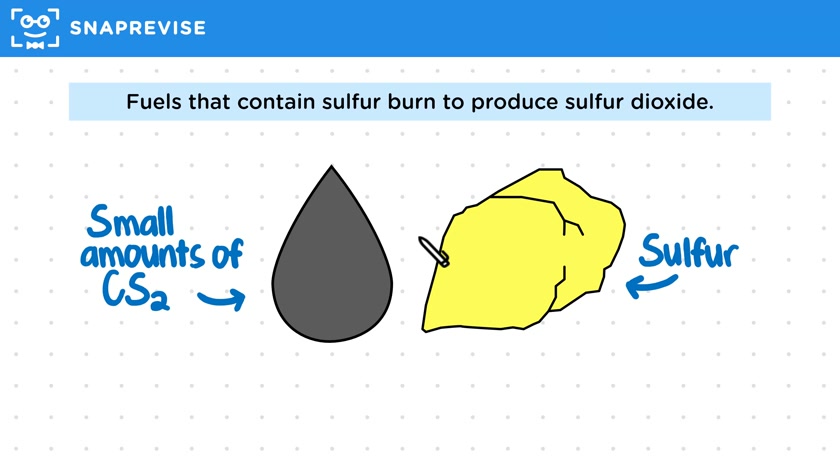
- Sulfur in fuels burns to produce sulfur dioxide.
- Carbon-based fuels produce carbon dioxide with a good oxygen supply and carbon monoxide or soot with inadequate oxygen.
- Methane undergoes complete combustion to form carbon dioxide and water vapor.
- Incomplete combustion of methane produces carbon monoxide or soot.
- In exams, predict combustion type based on oxygen supply and resulting products.
Please subscribe to access these revision notes.
This, and all other video notes, are included in our premium subscriptions.
Premium accounts get access to all videos and revision notes.
19
questions for Chemistry of the atmosphere
3
questions for Common atmospheric pollutants and their sources