
GCSE Combined Science (AQA)
622 videos | 38 hours
Please subscribe to watch this video.
This, and all other videos, are included in our premium subscriptions.
Premium accounts get access to all videos.
Enable autoplay to keep watching
Your browser is blocking videos from playing automatically. To turn it back on:
Safari (Mac): Click the Safari menu item in the top bar, then Settings → Websites → Auto-Play, then set Auto-Play to Allow All Auto-Play for the current website.
Safari (iPhone/iPad): open the Settings app, then Apps → Safari → Auto-Play, and select Allow All Auto-Play.
Binomial Naming System
- The binomial naming system was proposed by Lanis to ensure clarity about which organism is being discussed.
- Binomial means "two names," with "bi" indicating two and "nomial" referring to names.
- Organisms are given a two-part Latin scientific name consisting of genus and species.
- The genus and species are categories in the Lanis classification system.
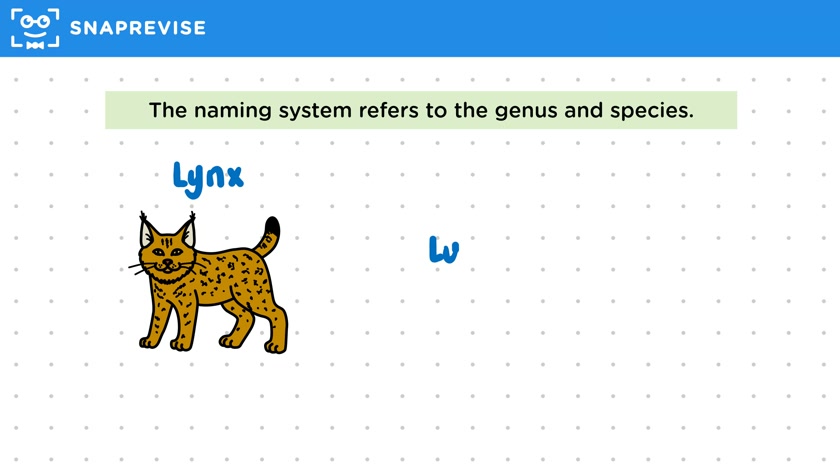
- Example: The common name "lynx" has the binomial name "Lynx rufus," where "Lynx" is the genus and "rufus" is the species.
- The genus name is capitalized, and the species name is written in lowercase.
- While not essential for exams, it is good practice to know how to recognize and correctly write binomial names.
- In writing, binomial names are underlined when handwritten and italicized when printed.
- Sometimes the genus in a binomial name is abbreviated to just the first letter.
Please subscribe to access these revision notes.
This, and all other video notes, are included in our premium subscriptions.
Premium accounts get access to all videos and revision notes.
81
questions for Inheritance, Variation and Evolution
1
questions for Classification of Living Organisms