
GCSE Combined Science (AQA)
622 videos | 38 hours
Please subscribe to watch this video.
This, and all other videos, are included in our premium subscriptions.
Premium accounts get access to all videos.
Enable autoplay to keep watching
Your browser is blocking videos from playing automatically. To turn it back on:
Safari (Mac): Click the Safari menu item in the top bar, then Settings → Websites → Auto-Play, then set Auto-Play to Allow All Auto-Play for the current website.
Safari (iPhone/iPad): open the Settings app, then Apps → Safari → Auto-Play, and select Allow All Auto-Play.
Biodiversity
- Biodiversity refers to the variety of all different species of organisms on Earth or within an ecosystem.
- The term "biodiversity" combines "bio" (living) and "diversity" (variety or difference).
- Examples of biodiversity can be observed in coastal ocean areas, including species like fish, turtles, whales, and swordfish.
- Biodiversity is crucial because organisms depend on each other for food, shelter, and environmental maintenance, a concept known as interdependence.
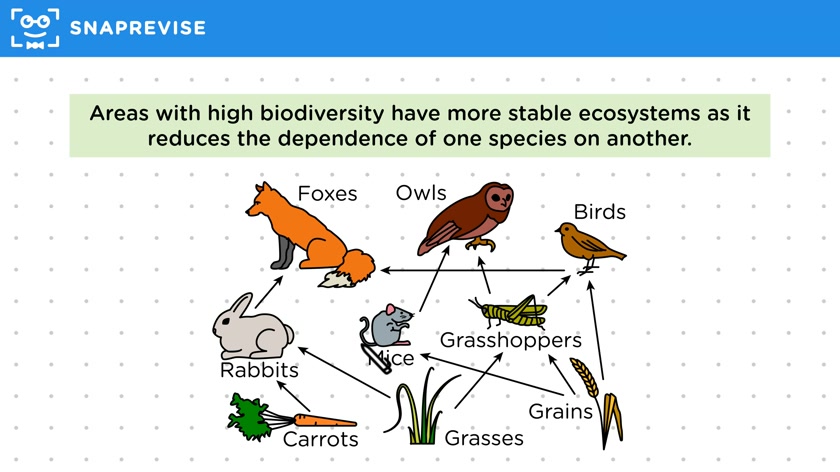
- High biodiversity contributes to more stable ecosystems by reducing the dependence of one species on another.
- Human activities such as deforestation, mining, resource extraction, waste production, and building are reducing biodiversity.
- The reduction in biodiversity poses significant risks to human survival as it impacts the stability and sustainability of ecosystems.
- Efforts to halt biodiversity loss have only recently begun, indicating the need for continued and increased action to preserve biodiversity.
Please subscribe to access these revision notes.
This, and all other video notes, are included in our premium subscriptions.
Premium accounts get access to all videos and revision notes.
18
questions for Ecology
9
questions for Biodiversity and the Effect of Human Interaction on Ecosystems