
GCSE Combined Science (AQA)
622 videos | 38 hours
Please subscribe to watch this video.
This, and all other videos, are included in our premium subscriptions.
Premium accounts get access to all videos.
Enable autoplay to keep watching
Your browser is blocking videos from playing automatically. To turn it back on:
Safari (Mac): Click the Safari menu item in the top bar, then Settings → Websites → Auto-Play, then set Auto-Play to Allow All Auto-Play for the current website.
Safari (iPhone/iPad): open the Settings app, then Apps → Safari → Auto-Play, and select Allow All Auto-Play.
Cancer
- Cancer results from cellular changes that lead to uncontrolled growth and division.
- Normal cell differentiation or division can malfunction, affecting certain genes.
- This uncontrolled division occurs through mitosis, leading to abnormal cancer cells.
- These abnormal cells can cluster to form a tumor.
- Common cancers in the UK include breast, lung, prostate, and bowel cancer.
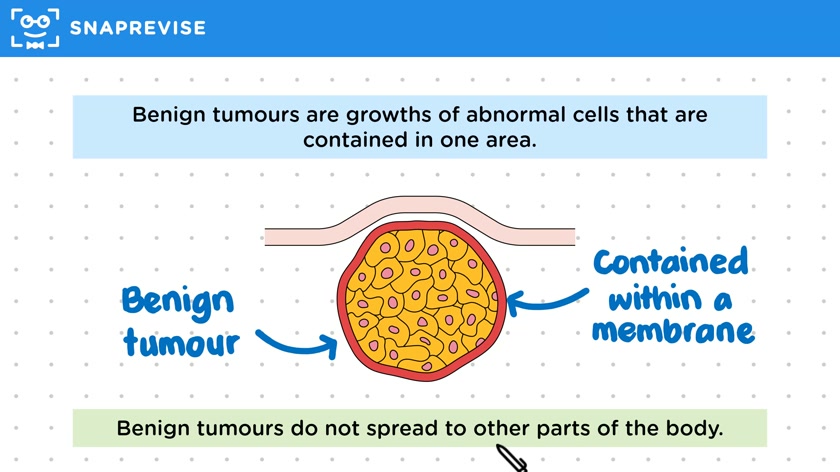
- Benign tumors consist of abnormal cells confined to one area, contained within a membrane, and do not spread to other body parts.
- Although benign tumors are not cancerous and do not spread, they can grow large and potentially threaten life by pressuring organs.
- Malignant tumor cells are cancerous, not contained, and can invade neighboring tissues.
- Malignant cancer cells spread to other body parts through the bloodstream, leading to secondary tumors.
Please subscribe to access these revision notes.
This, and all other video notes, are included in our premium subscriptions.
Premium accounts get access to all videos and revision notes.
55
questions for Organisation
47
questions for Animal Tissues, Organs and Organ Systems