
GCSE Combined Science (AQA)
622 videos | 38 hours
Please subscribe to watch this video.
This, and all other videos, are included in our premium subscriptions.
Premium accounts get access to all videos.
Enable autoplay to keep watching
Your browser is blocking videos from playing automatically. To turn it back on:
Safari (Mac): Click the Safari menu item in the top bar, then Settings → Websites → Auto-Play, then set Auto-Play to Allow All Auto-Play for the current website.
Safari (iPhone/iPad): open the Settings app, then Apps → Safari → Auto-Play, and select Allow All Auto-Play.
Controlling Heart Rate
- Heart rate, also known as pulse rate, is the number of heartbeats per minute (BPM).
- You can measure your pulse with your fingers on your wrist or neck.
- The average heart rate for 14 to 16-year-olds is between 60 and 100 BPM.
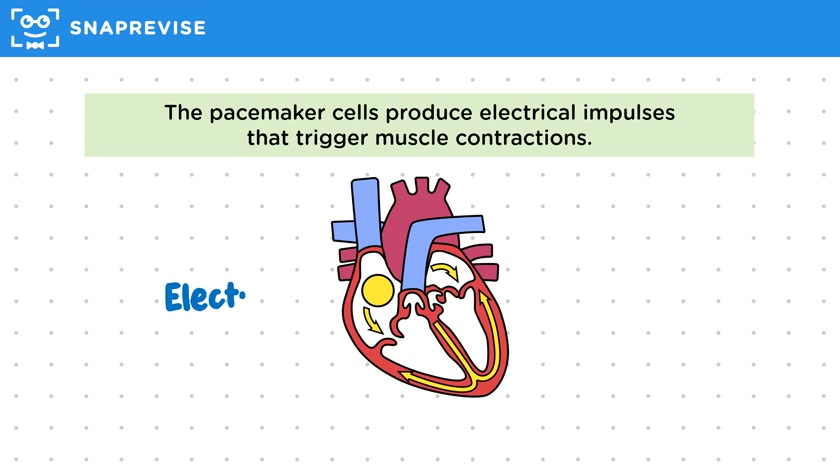
- Heart rate is controlled by a group of cells in the right atrium called pacemaker cells.
- Pacemaker cells are not a single cell but a group.
- These cells allow the heart to produce its own contractions independently of the nervous system.
- Pacemaker cells generate electrical impulses that trigger heart muscle contractions.
- These electrical impulses spread throughout the heart and can be measured with an ECG (Electrocardiogram).
- If pacemaker cells malfunction, doctors can use artificial pacemakers.
- Artificial pacemakers are small devices surgically implanted in the chest, sending electrical signals to control the heartbeat.
- Artificial pacemakers are crucial for patients whose natural pacemaker cells are not functioning properly.
Please subscribe to access these revision notes.
This, and all other video notes, are included in our premium subscriptions.
Premium accounts get access to all videos and revision notes.
55
questions for Organisation
47
questions for Animal Tissues, Organs and Organ Systems