
GCSE Combined Science (AQA)
622 videos | 38 hours
Please subscribe to watch this video.
This, and all other videos, are included in our premium subscriptions.
Premium accounts get access to all videos.
Enable autoplay to keep watching
Your browser is blocking videos from playing automatically. To turn it back on:
Safari (Mac): Click the Safari menu item in the top bar, then Settings → Websites → Auto-Play, then set Auto-Play to Allow All Auto-Play for the current website.
Safari (iPhone/iPad): open the Settings app, then Apps → Safari → Auto-Play, and select Allow All Auto-Play.
Decomposition & Decomposers
- Decomposition, also known as decay, is the breakdown of organisms after their death, affecting all organisms including plants and animals.
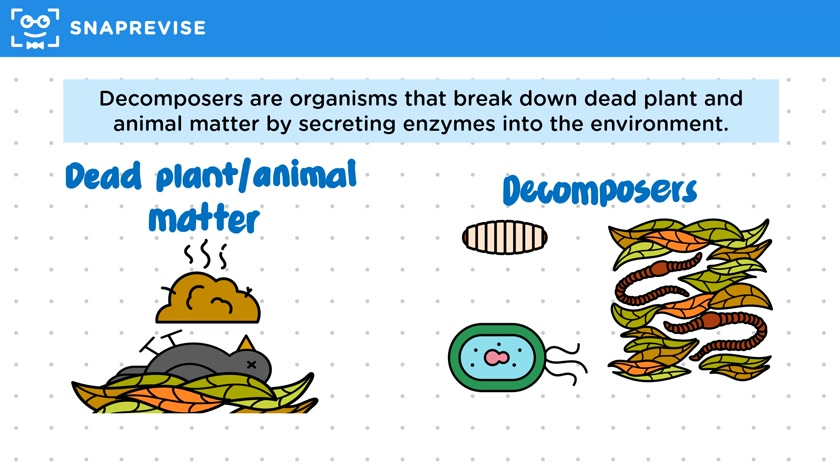
- Decomposers, primarily microorganisms like bacteria and fungi, as well as worms and maggots, carry out the process of decomposition.
- For academic purposes, it's sufficient to refer to microorganisms as decomposers without naming specific ones, focusing instead on understanding their role.
- Decomposers break down dead plant and animal matter by secreting enzymes into the environment, which helps in recycling materials within an ecosystem.
- Decomposition allows for the cycling of materials, enabling them to re-enter the ground or air for use by other organisms.
- Through decomposition, carbon is returned to the atmosphere as carbon dioxide and mineral ions are returned to the soil, contributing to the carbon cycle.
Please subscribe to access these revision notes.
This, and all other video notes, are included in our premium subscriptions.
Premium accounts get access to all videos and revision notes.
18
questions for Ecology
6
questions for Organisation of an Ecosystem