
GCSE Combined Science (AQA)
622 videos | 38 hours
Please subscribe to watch this video.
This, and all other videos, are included in our premium subscriptions.
Premium accounts get access to all videos.
Enable autoplay to keep watching
Your browser is blocking videos from playing automatically. To turn it back on:
Safari (Mac): Click the Safari menu item in the top bar, then Settings → Websites → Auto-Play, then set Auto-Play to Allow All Auto-Play for the current website.
Safari (iPhone/iPad): open the Settings app, then Apps → Safari → Auto-Play, and select Allow All Auto-Play.
Deformations
- Deformation occurs when a force causes an object to change shape.
- Stretching an elastic band is an example of deformation.
- Multiple balanced forces must be applied for deformation to occur.
- Forces can change an object's speed or direction based on the overall force.
- Two forces can deform an object without moving it overall.
- Example: One hand pulls on an elastic band while the thumb provides an equal and opposite force.
- Three types of deformation: stretching, compressing, and bending.
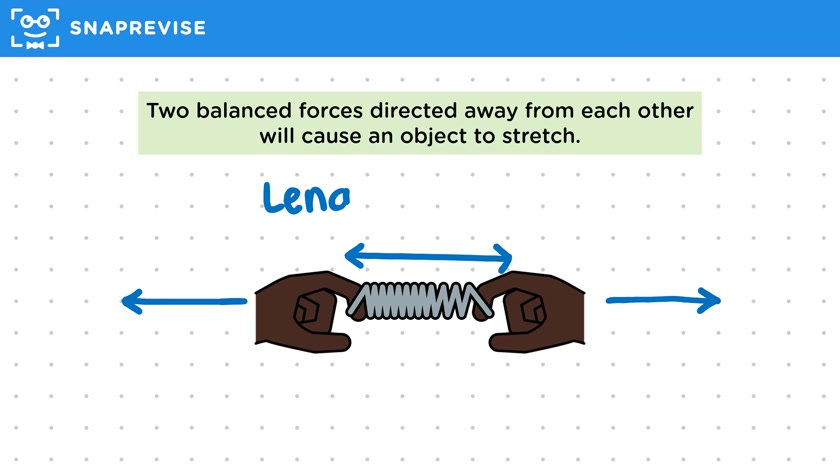
- Stretching: Two balanced forces directed away from each other cause an object to stretch (e.g., elastic band, spring).
- Compressing: Two balanced forces directed towards each other cause an object to compress (e.g., spring).
- Bending: Three or more balanced forces at different points cause an object to bend (e.g., rod with two downward forces at ends and an upward force in the middle).
- For exams, identify the type of deformation from the context of a question.
Please subscribe to access these revision notes.
This, and all other video notes, are included in our premium subscriptions.
Premium accounts get access to all videos and revision notes.
114
questions for Forces
1
questions for Forces and elasticity