
GCSE Combined Science (AQA)
622 videos | 38 hours
Please subscribe to watch this video.
This, and all other videos, are included in our premium subscriptions.
Premium accounts get access to all videos.
Enable autoplay to keep watching
Your browser is blocking videos from playing automatically. To turn it back on:
Safari (Mac): Click the Safari menu item in the top bar, then Settings → Websites → Auto-Play, then set Auto-Play to Allow All Auto-Play for the current website.
Safari (iPhone/iPad): open the Settings app, then Apps → Safari → Auto-Play, and select Allow All Auto-Play.
Discovery of Protons & Neutrons
- The alpha scattering experiment demonstrated that atoms have a small charged nucleus.
- The nucleus contains almost all the atom's mass and is positively charged.
- Electrons, which are negatively charged, orbit around the nucleus.
- The positive charge of the nucleus cancels out the negative charge of the electrons, resulting in no overall charge for the atom.
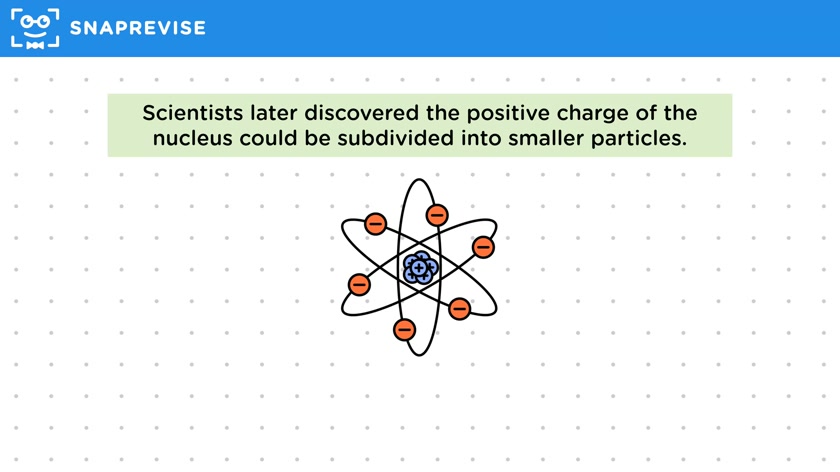
- Scientists later discovered that the nucleus's positive charge is composed of smaller particles called protons.
- The discovery of protons led to the understanding that protons and electrons have equal and opposite charges.
- In 1932, James Chadwick discovered neutrons, uncharged particles within the nucleus.
- Neutrons are similar in mass to protons but have no charge, making them difficult to detect.
- The presence of neutrons explains why elements can have varying masses and led to the concept of isotopes, which are versions of the same element with different masses.
Please subscribe to access these revision notes.
This, and all other video notes, are included in our premium subscriptions.
Premium accounts get access to all videos and revision notes.
111
questions for Atomic structure
40
questions for Atoms and isotopes