
GCSE Combined Science (AQA)
622 videos | 38 hours
Please subscribe to watch this video.
This, and all other videos, are included in our premium subscriptions.
Premium accounts get access to all videos.
Enable autoplay to keep watching
Your browser is blocking videos from playing automatically. To turn it back on:
Safari (Mac): Click the Safari menu item in the top bar, then Settings → Websites → Auto-Play, then set Auto-Play to Allow All Auto-Play for the current website.
Safari (iPhone/iPad): open the Settings app, then Apps → Safari → Auto-Play, and select Allow All Auto-Play.
Forces
Forces and their interactions
Effects of Forces
2:07
Introduction to Forces
Spec
4.5.1.2
- A force is defined as a push or a pull exerted by one object on another.
- Examples of forces include pushing a box, gravity, driving force, and friction.
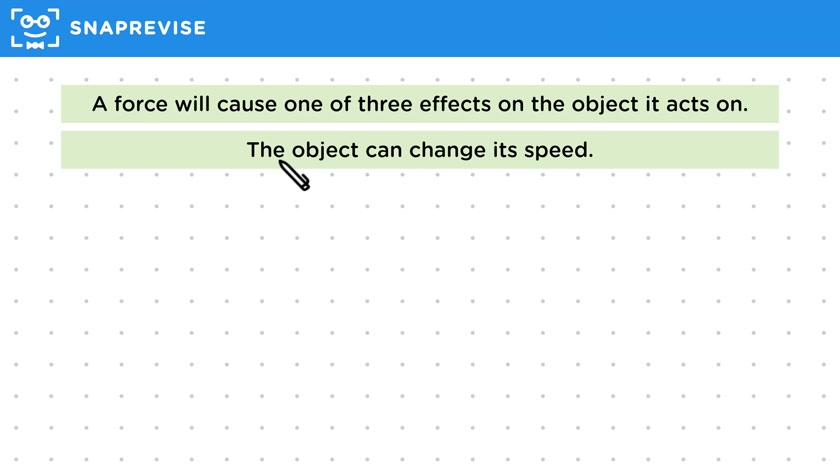
- Forces can cause three main effects on an object if they are unbalanced:
- 1. Change in shape (e.g., stretching a rubber band, bending, breaking, or squashing).
- 2. Change in speed (e.g., a train accelerating due to the driving force from the engine).
- 3. Change in direction (e.g., a ball changing direction when hit by a racket).
- These changes indicate that the velocity of the object can change.
- Understanding when a force is acting on a system is crucial for identifying changes in an object's behavior.
Please subscribe to access these revision notes.
This, and all other video notes, are included in our premium subscriptions.
Premium accounts get access to all videos and revision notes.
Report an Issue
Spotted something wrong? Let us know and we'll take a look.