
GCSE Combined Science (AQA)
622 videos | 38 hours
Please subscribe to watch this video.
This, and all other videos, are included in our premium subscriptions.
Premium accounts get access to all videos.
Enable autoplay to keep watching
Your browser is blocking videos from playing automatically. To turn it back on:
Safari (Mac): Click the Safari menu item in the top bar, then Settings → Websites → Auto-Play, then set Auto-Play to Allow All Auto-Play for the current website.
Safari (iPhone/iPad): open the Settings app, then Apps → Safari → Auto-Play, and select Allow All Auto-Play.
Enzymes & Temperature
- The optimum temperature for an enzyme is where it functions most effectively.
- Different enzymes have varying optimum temperatures.
- A temperature scale in the diagram shows enzymes placed at their optimum temperatures, which differ for each enzyme.
- In humans, enzymes generally work best around body temperature, approximately 37 degrees Celsius.
- At 37 degrees Celsius, enzymes and substrates have the most successful collisions.
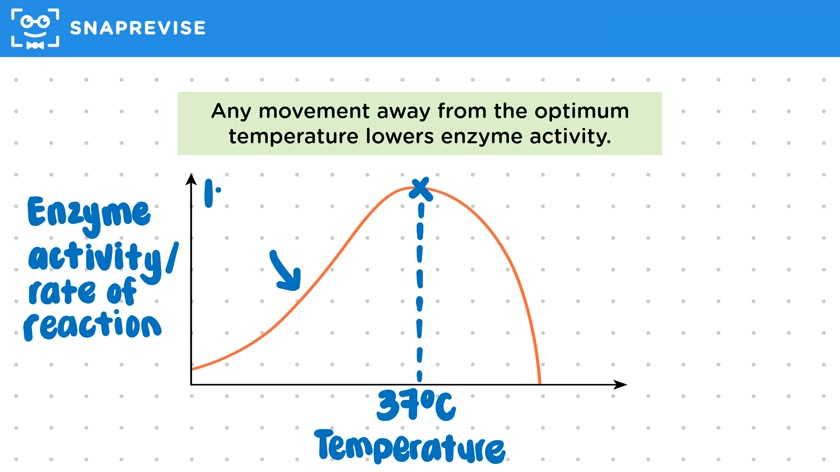
- Moving away from the optimum temperature reduces enzyme activity.
- A graph with temperature on the x-axis and enzyme activity on the y-axis shows that enzyme activity increases with temperature until it reaches the optimum at 37 degrees, then decreases as temperature continues to rise.
- Enzymes are denatured by high temperatures, altering the shape of their active site and preventing them from binding to substrates.
- Maintaining body temperature around 37 degrees Celsius is crucial for optimal enzyme function.
Please subscribe to access these revision notes.
This, and all other video notes, are included in our premium subscriptions.
Premium accounts get access to all videos and revision notes.
55
questions for Organisation
47
questions for Animal Tissues, Organs and Organ Systems