
GCSE Combined Science (AQA)
622 videos | 38 hours
Please subscribe to watch this video.
This, and all other videos, are included in our premium subscriptions.
Premium accounts get access to all videos.
Enable autoplay to keep watching
Your browser is blocking videos from playing automatically. To turn it back on:
Safari (Mac): Click the Safari menu item in the top bar, then Settings → Websites → Auto-Play, then set Auto-Play to Allow All Auto-Play for the current website.
Safari (iPhone/iPad): open the Settings app, then Apps → Safari → Auto-Play, and select Allow All Auto-Play.
Fleming's Left-Hand Rule
- Fleming's left hand rule relates a current-carrying conductor, the magnetic field it's in, and the force produced between them.
- Current-carrying wires generate a magnetic field and experience a force in another field, known as the motor effect.
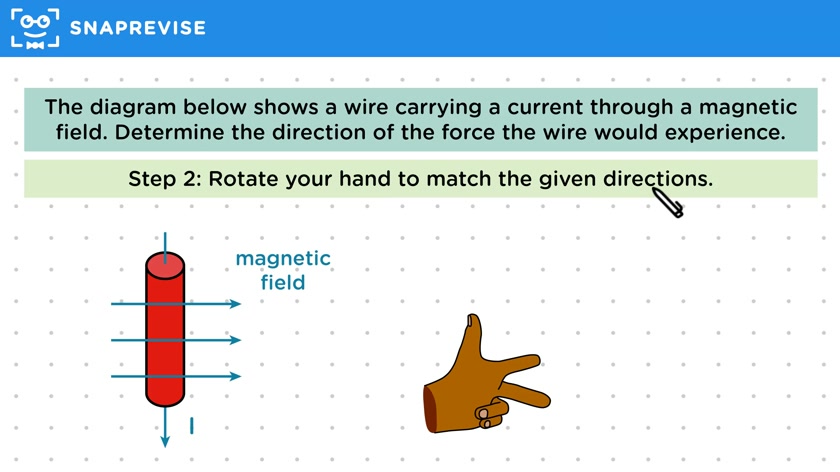
- Fleming's left hand rule helps determine the directions of current, magnetic field, and force.
- Assign each to a finger: second finger for current (C for current), first finger for magnetic field (F for field), and thumb for force (M for motion).
- Fingers must be at right angles to each other for the motor effect to be strongest, as current and field are perpendicular.
- Use the left hand rule to determine the direction of force, field, or current based on a diagram.
- Example: A wire with current flowing downward and a perpendicular field pointing right results in a force pointing out of the page.
- Reversing the current in a wire reverses the direction of the magnetic force.
- Reversing the magnetic field direction also reverses the magnetic force direction.
- Dot notation represents a field directed out of the page; cross notation represents a field directed into the page.
Please subscribe to access these revision notes.
This, and all other video notes, are included in our premium subscriptions.
Premium accounts get access to all videos and revision notes.
54
questions for Magnetism and electromagnetism
34
questions for The motor effect