
GCSE Combined Science (AQA)
622 videos | 38 hours
Please subscribe to watch this video.
This, and all other videos, are included in our premium subscriptions.
Premium accounts get access to all videos.
Enable autoplay to keep watching
Your browser is blocking videos from playing automatically. To turn it back on:
Safari (Mac): Click the Safari menu item in the top bar, then Settings → Websites → Auto-Play, then set Auto-Play to Allow All Auto-Play for the current website.
Safari (iPhone/iPad): open the Settings app, then Apps → Safari → Auto-Play, and select Allow All Auto-Play.
Group 7: Halogens
- Group seven elements are non-metals known as halogens.
- Halogens are located on the right side of the periodic table with other non-metals.
- Halogens consist of molecules made of pairs of atoms.
- Common halogen molecules include fluorine (F2), chlorine (Cl2), bromine (Br2), and iodine (I2).
- Halogens are never found as single atoms and exist as pairs when not in compounds.
- Group seven elements are very reactive.
- Fluorine is highly reactive and can ignite charcoal when exposed to it.
- Halogens have seven electrons in their outer shell.
- All halogens have similar reactions due to their electron configuration.
- Halogens react with group one alkaline metals like lithium, producing a white salt compound.
- Halogens gain a single electron to complete their outer shell, forming negative ions.
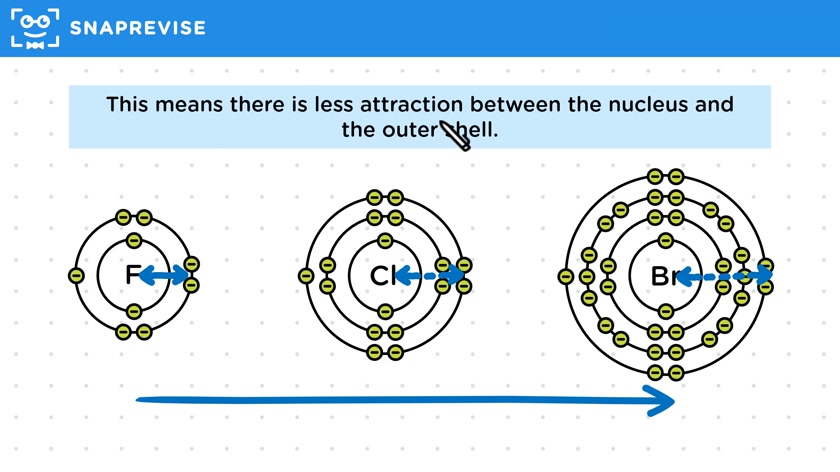
- Reactivity of halogens decreases down the group.
- Fluorine is the most reactive, while iodine is the least reactive.
- Atoms increase in size down the group, making the outer shell further from the nucleus.
- There is less attraction between the nucleus and the outer shell as size increases, reducing reactivity.
- Group seven reactivity trend is opposite to group one, where reactivity increases down the group.
- Relative molecular mass increases down group seven.
- Melting and boiling points of halogens increase down the group.
- Fluorine is a yellow gas at room temperature, while iodine is a dark solid.
- Intermolecular forces between molecules get stronger down the group, requiring more energy to overcome.
- Properties can be predicted from trends down a group.
- Melting and boiling points increase with each element down the group.
- Estimates for astatine's melting and boiling points can be made based on trends.
Please subscribe to access these revision notes.
This, and all other video notes, are included in our premium subscriptions.
Premium accounts get access to all videos and revision notes.
57
questions for Atomic structure and the periodic table
5
questions for The periodic table