
GCSE Combined Science (AQA)
622 videos | 38 hours
Please subscribe to watch this video.
This, and all other videos, are included in our premium subscriptions.
Premium accounts get access to all videos.
Enable autoplay to keep watching
Your browser is blocking videos from playing automatically. To turn it back on:
Safari (Mac): Click the Safari menu item in the top bar, then Settings → Websites → Auto-Play, then set Auto-Play to Allow All Auto-Play for the current website.
Safari (iPhone/iPad): open the Settings app, then Apps → Safari → Auto-Play, and select Allow All Auto-Play.
Hydroelectric Energy
- Water in rivers flows to lakes and oceans during the water cycle.
- Water in lakes and seas evaporates, forming clouds that rain down, replenishing rivers.
- The sun provides thermal energy for evaporation; water vapor cools and condenses to form rain.
- Rain has gravitational potential energy, which converts to kinetic energy as it falls.
- Water in rivers converts gravitational potential energy to kinetic energy, flowing back to lakes or seas.
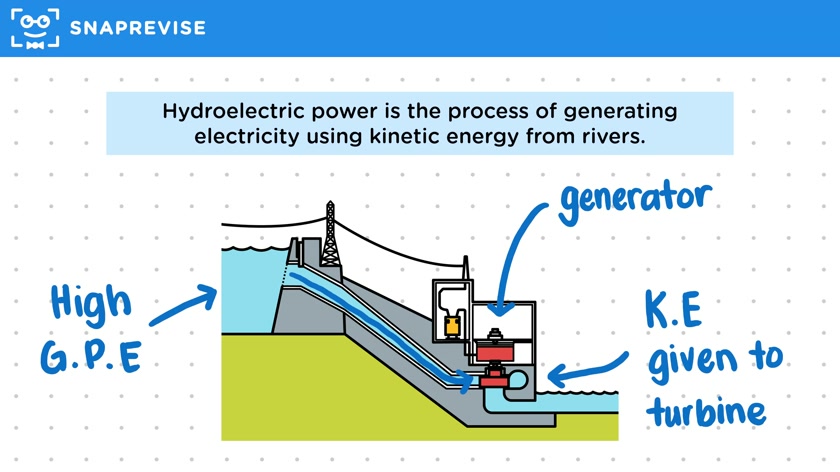
- Hydroelectric power harnesses kinetic energy from rivers to generate electricity.
- A hydroelectric power station uses water's gravitational potential energy, converting it to kinetic energy to spin a turbine and drive a generator.
- Basic understanding of hydroelectric power stations and energy changes is necessary.
- Hydroelectric power stations are typically built into dams, which store water in reservoirs.
- Water release from reservoirs is controlled to flow through turbines, producing electricity.
- Economic and environmental factors are crucial when building dams and hydroelectric power stations.
- Building a dam creates a new lake, potentially destroying the local environment.
- Dams are expensive to build but cheap to run with large energy output.
- Advantages of hydroelectric energy: clean, renewable, reliable, no emissions.
- Disadvantages: expensive to build, impacts local environment, requires deforestation, and may displace people.
Please subscribe to access these revision notes.
This, and all other video notes, are included in our premium subscriptions.
Premium accounts get access to all videos and revision notes.
88
questions for Energy
41
questions for National and global energy resources