
GCSE Combined Science (AQA)
622 videos | 38 hours
Please subscribe to watch this video.
This, and all other videos, are included in our premium subscriptions.
Premium accounts get access to all videos.
Enable autoplay to keep watching
Your browser is blocking videos from playing automatically. To turn it back on:
Safari (Mac): Click the Safari menu item in the top bar, then Settings → Websites → Auto-Play, then set Auto-Play to Allow All Auto-Play for the current website.
Safari (iPhone/iPad): open the Settings app, then Apps → Safari → Auto-Play, and select Allow All Auto-Play.
Improving Efficiency
- Improving process efficiency reduces energy needed.
- Processes like boiling water require consistent output; reducing input is key.
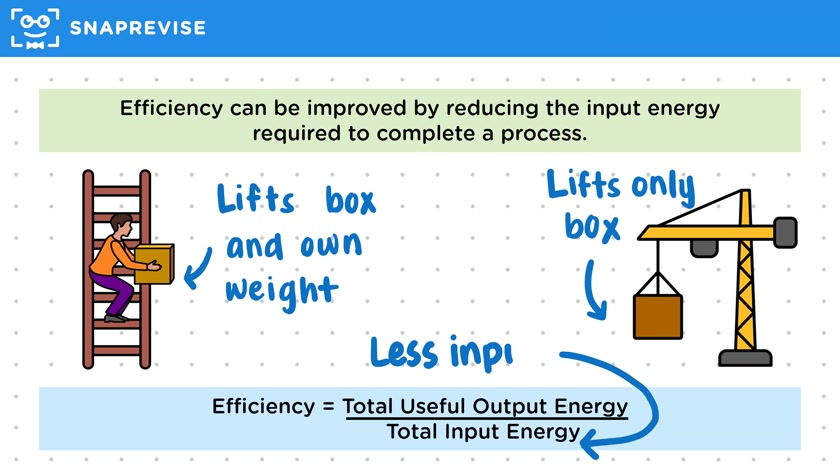
- Efficiency can be improved by increasing useful output energy or decreasing wasted energy.
- Decreasing input energy also increases efficiency.
- Example: Using a crane instead of manual lifting reduces input energy, increasing efficiency.
- Efficiency improves by reducing resistive forces and heat loss.
- Example: Lubricating car engines reduces friction and heat loss.
- Streamlining car bodies reduces air resistance.
- Low friction wheels reduce heat loss.
- Driving slowly can reduce energy waste from air resistance.
- Insulating homes reduces waste energy.
- Less waste leads to more useful output and higher efficiency.
- Understanding methods to reduce input and waste energy is important for exams.
Please subscribe to access these revision notes.
This, and all other video notes, are included in our premium subscriptions.
Premium accounts get access to all videos and revision notes.
88
questions for Energy
25
questions for Conservation and dissipation of energy