
GCSE Combined Science (AQA)
622 videos | 38 hours
Please subscribe to watch this video.
This, and all other videos, are included in our premium subscriptions.
Premium accounts get access to all videos.
Enable autoplay to keep watching
Your browser is blocking videos from playing automatically. To turn it back on:
Safari (Mac): Click the Safari menu item in the top bar, then Settings → Websites → Auto-Play, then set Auto-Play to Allow All Auto-Play for the current website.
Safari (iPhone/iPad): open the Settings app, then Apps → Safari → Auto-Play, and select Allow All Auto-Play.
Kinetic Energy of Molecules
- Molecules in a substance are in constant motion.
- Molecules can be thought of as balls of matter that are always moving, such as vibrating.
- The movement of molecules depends on intermolecular bonds holding them together.
- Intermolecular bonds can be likened to springs that keep molecules in formation.
- Motion of molecules means they carry kinetic energy.
- Kinetic energy is held by moving objects.
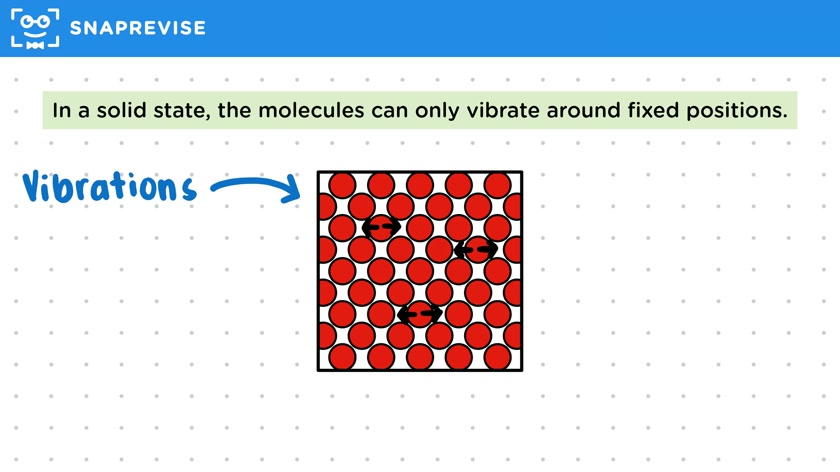
- In a solid state, molecules vibrate around fixed positions due to strong intermolecular bonds.
- Solid molecules have a small amount of kinetic energy as they can't move much.
- In a liquid state, molecules can move and flow around each other due to weaker bonds.
- Liquid molecules have a moderate amount of kinetic energy, more than solids but still limited.
- In a gas state, molecules move freely with random motion as intermolecular bonds are broken.
- Gas molecules have a large amount of kinetic energy, much more than solids or liquids.
- Understanding the differences in kinetic energy between states of matter is important for exams.
Please subscribe to access these revision notes.
This, and all other video notes, are included in our premium subscriptions.
Premium accounts get access to all videos and revision notes.
89
questions for Particle model of matter
44
questions for Internal energy and energy transfers