
GCSE Combined Science (AQA)
622 videos | 38 hours
Please subscribe to watch this video.
This, and all other videos, are included in our premium subscriptions.
Premium accounts get access to all videos.
Enable autoplay to keep watching
Your browser is blocking videos from playing automatically. To turn it back on:
Safari (Mac): Click the Safari menu item in the top bar, then Settings → Websites → Auto-Play, then set Auto-Play to Allow All Auto-Play for the current website.
Safari (iPhone/iPad): open the Settings app, then Apps → Safari → Auto-Play, and select Allow All Auto-Play.
Magnetic Poles
- The two poles of a magnet are where magnetic forces are strongest.
- Example: Bar magnet attracting metal paperclips to its ends, not the middle.
- The ends of the magnet are the poles, where magnetic forces are strongest.
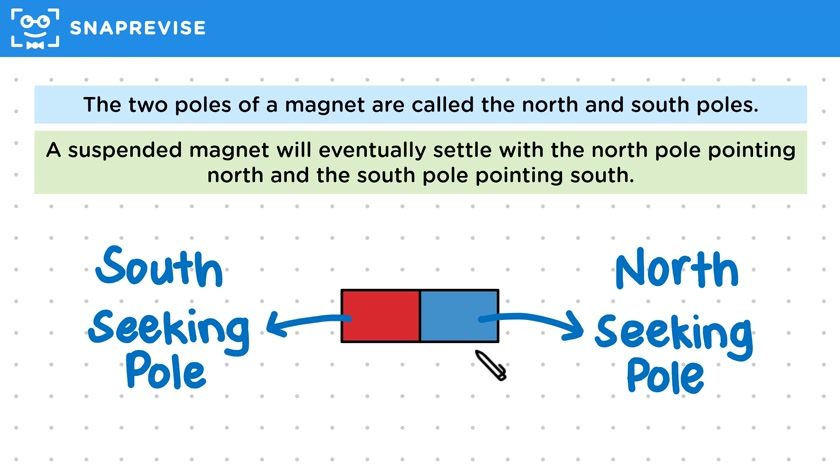
- The poles of a magnet are called the North and South Poles.
- A suspended magnet will settle with the North pole pointing north and the South pole pointing south.
- In a bar magnet, the left pole is the south seeking pole, and the right pole is the north seeking pole.
- Freely suspended, the left pole points south, and the right pole points north.
- Like poles repel each other, and unlike poles attract each other.
- Example: Two bar magnets with a north pole facing a south pole will attract each other.
- The attractive force helps name the poles based on which pole of the earth they are attracted to.
- Two magnets with north poles facing each other will repel due to like poles.
- Magnetic forces are non-contact forces, occurring even if poles aren't touching.
Please subscribe to access these revision notes.
This, and all other video notes, are included in our premium subscriptions.
Premium accounts get access to all videos and revision notes.
18
questions for Ecology
3
questions for Adaptations, Interdependence and Competition