
GCSE Combined Science (AQA)
622 videos | 38 hours
Please subscribe to watch this video.
This, and all other videos, are included in our premium subscriptions.
Premium accounts get access to all videos.
Enable autoplay to keep watching
Your browser is blocking videos from playing automatically. To turn it back on:
Safari (Mac): Click the Safari menu item in the top bar, then Settings → Websites → Auto-Play, then set Auto-Play to Allow All Auto-Play for the current website.
Safari (iPhone/iPad): open the Settings app, then Apps → Safari → Auto-Play, and select Allow All Auto-Play.
Maintaining Blood Glucose Levels
- Optimum blood glucose levels are maintained through the continuous conversion between glucose and glycogen.
- The liver and muscles store glycogen and glucose.
- Conversion between glycogen and glucose occurs in both the liver and muscles, helping maintain constant blood sugar levels.
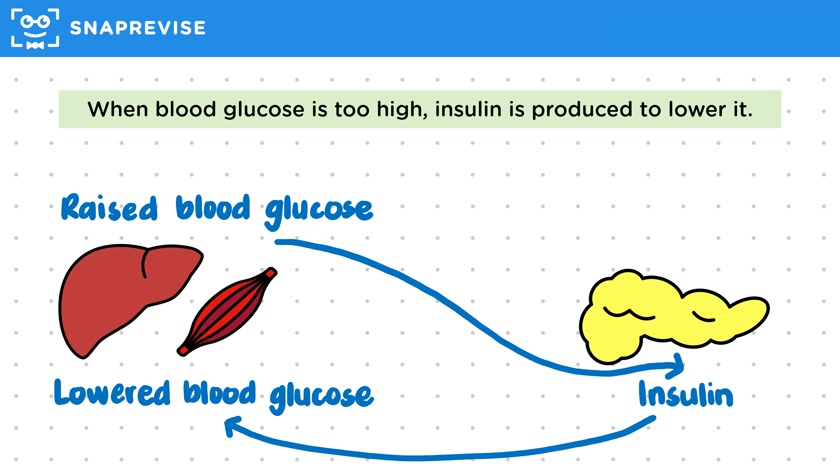
- Insulin lowers blood glucose levels and is produced by the pancreas when blood glucose is high, such as after a meal.
- Insulin converts glucose to glycogen in the liver and muscles to lower blood glucose.
- When blood glucose levels are low, the pancreas produces glucagon.
- Glucagon raises blood glucose levels by causing the liver and muscles to convert glycogen back to glucose.
- This process of regulating blood glucose levels through insulin and glucagon is an example of homeostasis, maintaining constant internal conditions in response to changes.
Please subscribe to access these revision notes.
This, and all other video notes, are included in our premium subscriptions.
Premium accounts get access to all videos and revision notes.
95
questions for Homeostasis and Response
72
questions for Hormonal Coordination in Humans