
GCSE Combined Science (AQA)
622 videos | 38 hours
Please subscribe to watch this video.
This, and all other videos, are included in our premium subscriptions.
Premium accounts get access to all videos.
Enable autoplay to keep watching
Your browser is blocking videos from playing automatically. To turn it back on:
Safari (Mac): Click the Safari menu item in the top bar, then Settings → Websites → Auto-Play, then set Auto-Play to Allow All Auto-Play for the current website.
Safari (iPhone/iPad): open the Settings app, then Apps → Safari → Auto-Play, and select Allow All Auto-Play.
Mass Extinction
- Mass extinction is defined as an event that causes the extinction of multiple species.
- Specific knowledge of an event is not required for the exam, but understanding the definition of mass extinction is necessary.
- An example of a mass extinction event is the extinction of dinosaurs.
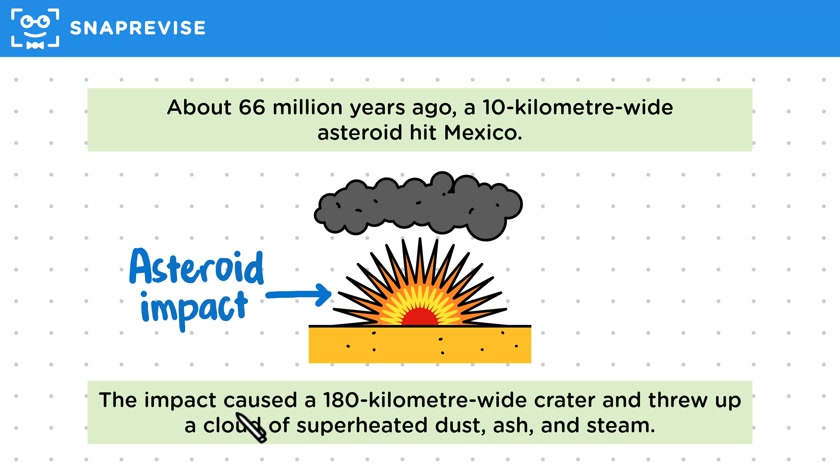
- About 66 million years ago, a 10-kilometer-wide asteroid struck Mexico.
- The impact created a 180-kilometer-wide crater and released a cloud of superheated dust, ash, and steam.
- This cloud blocked sunlight, leading to a significant drop in photosynthesis.
- The reduction in photosynthesis decreased food availability throughout the food chain.
- The lack of food and changes in temperature put immense pressure on dinosaurs and other species.
- These conditions led to the mass extinction of many species, including dinosaurs.
Please subscribe to access these revision notes.
This, and all other video notes, are included in our premium subscriptions.
Premium accounts get access to all videos and revision notes.
81
questions for Inheritance, Variation and Evolution
24
questions for The Development of Understanding of Gentics and Evolution