
GCSE Combined Science (AQA)
622 videos | 38 hours
Please subscribe to watch this video.
This, and all other videos, are included in our premium subscriptions.
Premium accounts get access to all videos.
Enable autoplay to keep watching
Your browser is blocking videos from playing automatically. To turn it back on:
Safari (Mac): Click the Safari menu item in the top bar, then Settings → Websites → Auto-Play, then set Auto-Play to Allow All Auto-Play for the current website.
Safari (iPhone/iPad): open the Settings app, then Apps → Safari → Auto-Play, and select Allow All Auto-Play.
Measuring Reaction Time
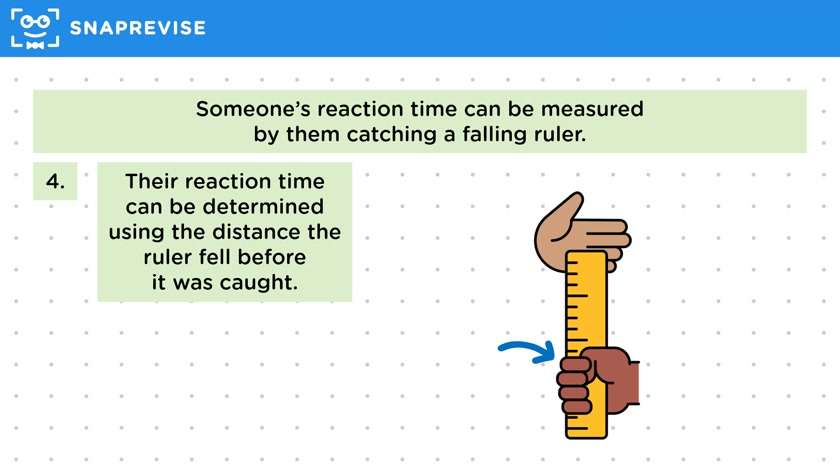
- Reaction time can be measured by catching a falling ruler.
- Reaction time is the interval between the need to act and the action itself.
- A common classroom method involves holding a ruler at the zero centimeter mark and dropping it without warning.
- The catcher must not be given any indication of when the ruler will be released.
- The distance the ruler falls before being caught indicates the reaction time.
- For good reactions, the ruler typically falls between 1 and 30 centimeters.
- Reaction time can be translated into time using the acceleration of 9.8 m/s��, but this is not required at GCSE level.
- Reaction times can be compared between different people or conditions, such as with distractions.
- Reaction times can also be measured electronically, which is more precise and removes human error.
- Electronic measurement involves pressing a button in response to a light or sound cue.
- The computer logs the time difference between the cue and the button press to determine reaction time.
- In exams, students may need to describe or critique methods of measuring reaction times.
- Some people may react faster to sounds than visual cues, which can introduce bias in measurements.
Please subscribe to access these revision notes.
This, and all other video notes, are included in our premium subscriptions.
Premium accounts get access to all videos and revision notes.
114
questions for Forces
95
questions for Forces and motion