
GCSE Combined Science (AQA)
622 videos | 38 hours
Please subscribe to watch this video.
This, and all other videos, are included in our premium subscriptions.
Premium accounts get access to all videos.
Enable autoplay to keep watching
Your browser is blocking videos from playing automatically. To turn it back on:
Safari (Mac): Click the Safari menu item in the top bar, then Settings → Websites → Auto-Play, then set Auto-Play to Allow All Auto-Play for the current website.
Safari (iPhone/iPad): open the Settings app, then Apps → Safari → Auto-Play, and select Allow All Auto-Play.
Newton's Third Law
- Newton's third law: forces exerted by two interacting objects are equal and opposite.
- It's the last and trickiest of Newton's three laws.
- Example: pushing a box with a hand results in equal and opposite forces (100 Newtons each).
- Demonstration with roller skates: two people push each other, moving apart due to equal and opposite forces.
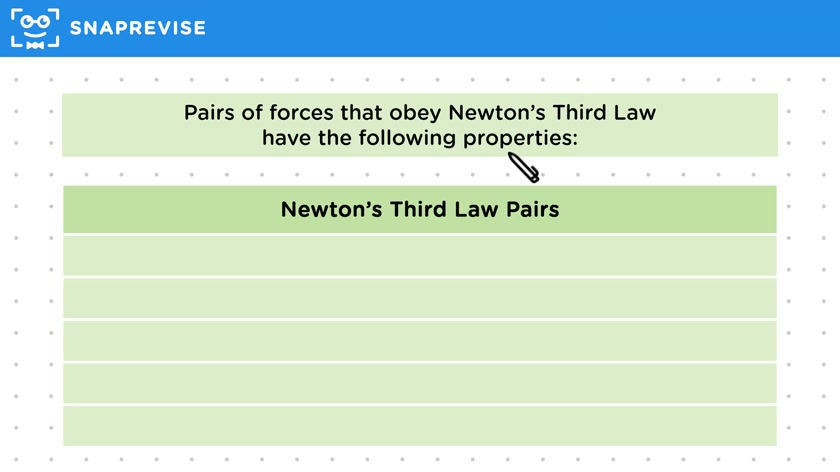
- Properties of forces obeying Newton's third law:
- Act on separate bodies.
- Same type of force.
- Act along the same line.
- Opposite directions.
- Same magnitude.
- Gravitational force example: Earth and feather experience equal forces, but Earth's movement is negligible due to its mass.
- Importance for exams: identify when forces obey Newton's third law, even if not obvious.
Please subscribe to access these revision notes.
This, and all other video notes, are included in our premium subscriptions.
Premium accounts get access to all videos and revision notes.
114
questions for Forces
95
questions for Forces and motion