
GCSE Combined Science (AQA)
622 videos | 38 hours
Please subscribe to watch this video.
This, and all other videos, are included in our premium subscriptions.
Premium accounts get access to all videos.
Enable autoplay to keep watching
Your browser is blocking videos from playing automatically. To turn it back on:
Safari (Mac): Click the Safari menu item in the top bar, then Settings → Websites → Auto-Play, then set Auto-Play to Allow All Auto-Play for the current website.
Safari (iPhone/iPad): open the Settings app, then Apps → Safari → Auto-Play, and select Allow All Auto-Play.
Non-Specific Defence Systems
- The body has non-specific defense systems to protect against general pathogens.
- These systems aim to prevent any pathogen from entering the body by providing an initial barrier.
- The first line of defense in humans is non-specific and involves physical and chemical barriers.
- The skin is the main barrier, covering the entire body and preventing pathogens from reaching underlying tissues.
- The skin also releases antimicrobial secretions that destroy harmful bacteria.
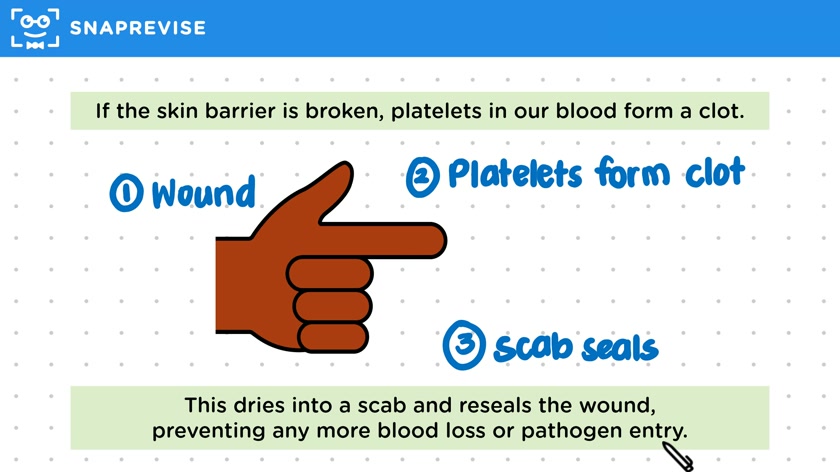
- If the skin barrier is broken, platelets in the blood form a clot to seal the wound and prevent further pathogen entry and blood loss.
- Areas of the body not covered by skin have other defenses such as tears and saliva, which contain antibacterial enzymes like lysozyme.
- The nose has hairs and mucus that filter out pathogens and prevent them from entering the respiratory system.
- If pathogens bypass these barriers, they are trapped in mucus produced by cells lining the trachea and bronchi.
- Cilia, tiny hair-like projections, move the mucus to the back of the throat where it is swallowed.
- Stomach acid then destroys the pathogens contained in the swallowed mucus.
Please subscribe to access these revision notes.
This, and all other video notes, are included in our premium subscriptions.
Premium accounts get access to all videos and revision notes.
1
questions for Infection and Response
1
questions for Communicable Diseases