
GCSE Combined Science (AQA)
622 videos | 38 hours
Please subscribe to watch this video.
This, and all other videos, are included in our premium subscriptions.
Premium accounts get access to all videos.
Enable autoplay to keep watching
Your browser is blocking videos from playing automatically. To turn it back on:
Safari (Mac): Click the Safari menu item in the top bar, then Settings → Websites → Auto-Play, then set Auto-Play to Allow All Auto-Play for the current website.
Safari (iPhone/iPad): open the Settings app, then Apps → Safari → Auto-Play, and select Allow All Auto-Play.
Nuclear Fuel
- Nuclear energy holds protons and neutrons together in an atom.
- Atoms have a central nucleus containing protons and neutrons, with electrons orbiting the nucleus.
- Energy is stored in nuclear bonds, similar to chemical bonds between atoms.
- Nuclear energy can be released by splitting a large nucleus into smaller nuclei, releasing energy due to fewer bonds in smaller nuclei.
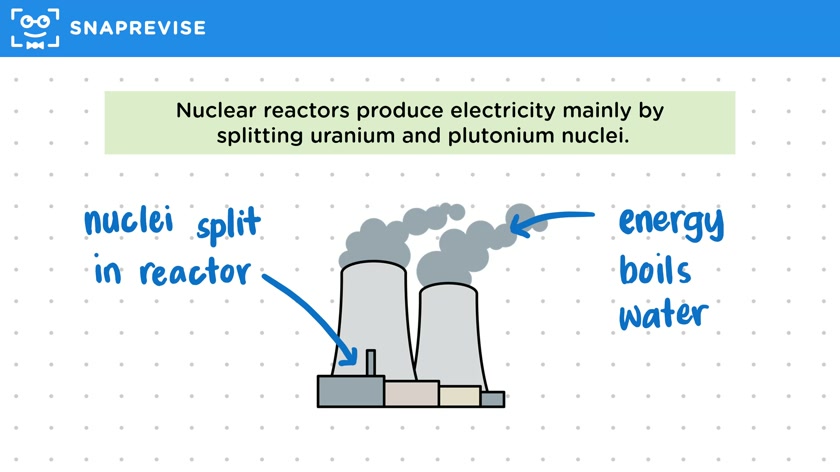
- Nuclear reactors generate electricity by splitting uranium and plutonium nuclei, specifically uranium-235 and plutonium-238.
- The splitting process produces heat, which boils water to create steam that spins a turbine.
- The steam from reactor towers is not pollution but simply steam.
- Uranium and plutonium are non-renewable fuels, mined from uranium ore found in soil, rock, and water.
- These fuels are expected to last thousands of years due to their recent technology and high energy output compared to fossil fuels.
- Advantages of nuclear fuels include zero carbon emissions and high energy output.
- Disadvantages include being non-renewable and producing radioactive byproducts, requiring careful disposal of nuclear waste.
Please subscribe to access these revision notes.
This, and all other video notes, are included in our premium subscriptions.
Premium accounts get access to all videos and revision notes.
88
questions for Energy
41
questions for National and global energy resources