
GCSE Combined Science (AQA)
622 videos | 38 hours
Please subscribe to watch this video.
This, and all other videos, are included in our premium subscriptions.
Premium accounts get access to all videos.
Enable autoplay to keep watching
Your browser is blocking videos from playing automatically. To turn it back on:
Safari (Mac): Click the Safari menu item in the top bar, then Settings → Websites → Auto-Play, then set Auto-Play to Allow All Auto-Play for the current website.
Safari (iPhone/iPad): open the Settings app, then Apps → Safari → Auto-Play, and select Allow All Auto-Play.
Nuclear Power Risks
- Nuclear fuels do not produce pollutant gases like fossil fuels.
- Gas released from nuclear reactors is harmless steam.
- Nuclear power stations are controversial due to environmental impacts.
- They do not produce carbon dioxide or sulfur dioxide.
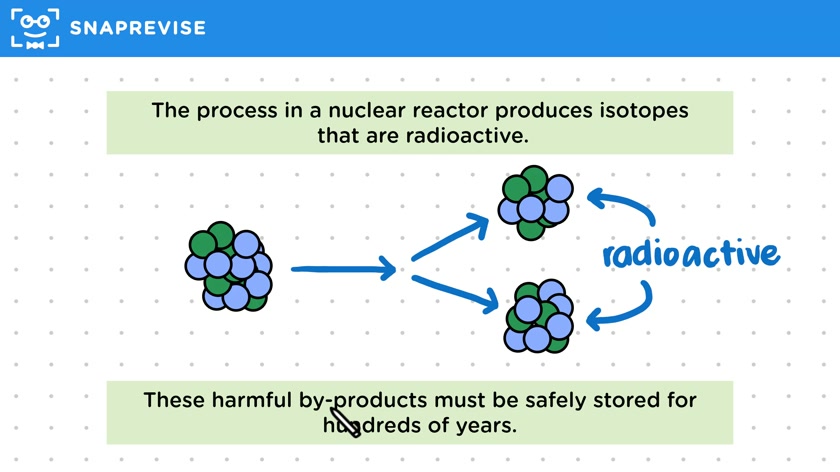
- Nuclear reactors produce radioactive isotopes.
- Smaller nuclei created in reactors are radioactive and undergo decay.
- These products are referred to as nuclear waste.
- Radiation is harmful to health and can contaminate the environment for centuries.
- Nuclear waste must be safely stored for hundreds of years.
- Waste is often sealed in lead containers underground or in disused mines.
- Nuclear power stations are designed to prevent radiation leaks.
- Concrete shields are used to prevent radiation from escaping.
- Extensive research and care are involved in handling and transporting waste.
- Safety measures include emergency shutdowns for out-of-control reactions.
- There is a risk of accidents, as seen in Chernobyl (1986) and Fukushima (2011).
Please subscribe to access these revision notes.
This, and all other video notes, are included in our premium subscriptions.
Premium accounts get access to all videos and revision notes.
88
questions for Energy
41
questions for National and global energy resources