
GCSE Combined Science (AQA)
622 videos | 38 hours
Please subscribe to watch this video.
This, and all other videos, are included in our premium subscriptions.
Premium accounts get access to all videos.
Enable autoplay to keep watching
Your browser is blocking videos from playing automatically. To turn it back on:
Safari (Mac): Click the Safari menu item in the top bar, then Settings → Websites → Auto-Play, then set Auto-Play to Allow All Auto-Play for the current website.
Safari (iPhone/iPad): open the Settings app, then Apps → Safari → Auto-Play, and select Allow All Auto-Play.
Plasma
- Blood is primarily composed of plasma.
- Plasma carries blood cells, platelets, and dissolved substances.
- When separated, plasma is a straw-colored liquid comprising about 55% of blood volume.
- The remaining 45% of blood volume consists of cells and platelets suspended in plasma.
- Blood is considered a tissue because it contains specialized cells that perform specific functions.
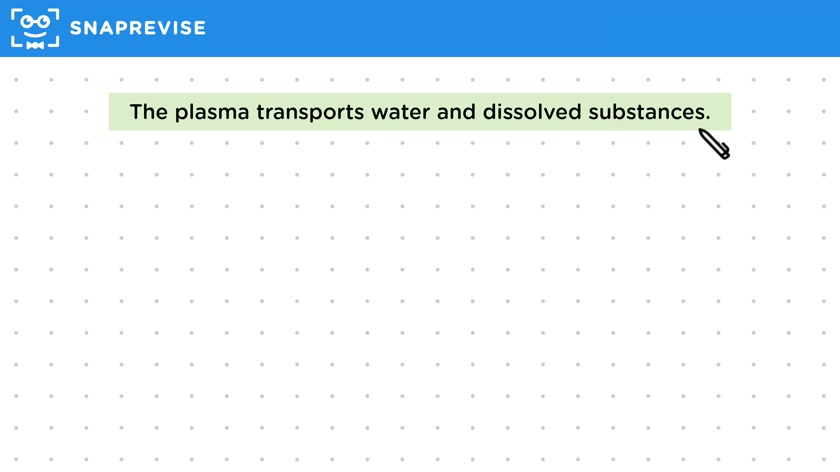
- Plasma, mostly water, transports various substances including carbon dioxide, glucose, proteins, amino acids, urea, glycerol, fatty acids, vitamins, ions, hormones, and antibodies.
- Plasma delivers these substances to tissues through capillary walls, forming tissue fluid.
- Tissue fluid facilitates the exchange of molecules and waste products between cells and blood.
- Blood travels through arteries to capillaries, where tissue fluid is formed, and veins carry the blood away after exchanging substances with cells.
Please subscribe to access these revision notes.
This, and all other video notes, are included in our premium subscriptions.
Premium accounts get access to all videos and revision notes.
55
questions for Organisation
47
questions for Animal Tissues, Organs and Organ Systems