
GCSE Combined Science (AQA)
622 videos | 38 hours
Please subscribe to watch this video.
This, and all other videos, are included in our premium subscriptions.
Premium accounts get access to all videos.
Enable autoplay to keep watching
Your browser is blocking videos from playing automatically. To turn it back on:
Safari (Mac): Click the Safari menu item in the top bar, then Settings → Websites → Auto-Play, then set Auto-Play to Allow All Auto-Play for the current website.
Safari (iPhone/iPad): open the Settings app, then Apps → Safari → Auto-Play, and select Allow All Auto-Play.
Protection from Irradiation
- Radiation intensity decreases with distance from the source.
- Radiation spreads out in all directions.
- Radioactive sources should be handled with long tongs to increase distance from the source.
- Gloves should be used for additional protection, but are not sufficient alone.
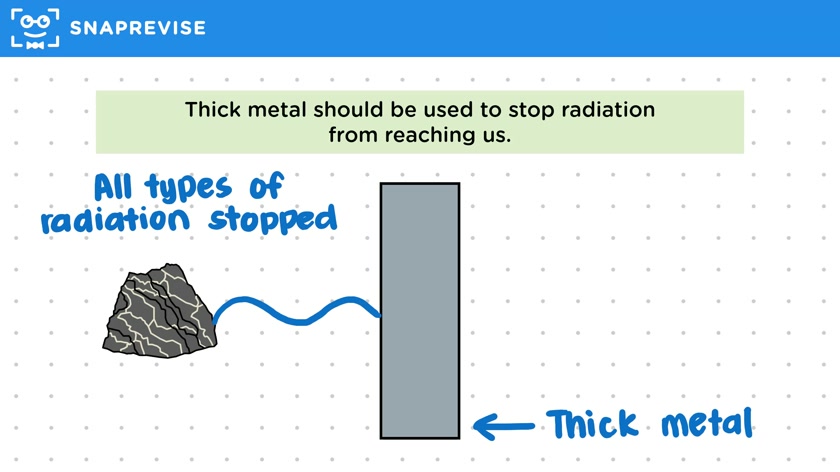
- Thick metal, such as a few centimeters of lead, can stop all types of radiation, including gamma rays.
- Metal protection allows observation of radiation without being irradiated.
- Such setups are used in labs, hospitals, and nuclear reactors.
- Exposure time to radioactive sources should be minimized to reduce overall radiation exposure.
- When not in use, radioactive sources should be stored in shielded, thick metal containers.
- Containers are sealed to prevent radiation escape.
- These containers are used for storing samples in labs, fuel rods in nuclear reactors, and burying radioactive waste.
- These protective measures should be recalled during exams when asked about irradiation protection.
Please subscribe to access these revision notes.
This, and all other video notes, are included in our premium subscriptions.
Premium accounts get access to all videos and revision notes.
111
questions for Atomic structure
71
questions for Atoms and nuclear radiation