
GCSE Combined Science (AQA)
622 videos | 38 hours
Please subscribe to watch this video.
This, and all other videos, are included in our premium subscriptions.
Premium accounts get access to all videos.
Enable autoplay to keep watching
Your browser is blocking videos from playing automatically. To turn it back on:
Safari (Mac): Click the Safari menu item in the top bar, then Settings → Websites → Auto-Play, then set Auto-Play to Allow All Auto-Play for the current website.
Safari (iPhone/iPad): open the Settings app, then Apps → Safari → Auto-Play, and select Allow All Auto-Play.
Rapid Species Change
- Mutations occasionally result in new phenotypes that are beneficial to the organism.
- These beneficial mutations are rare and occur during reproduction.
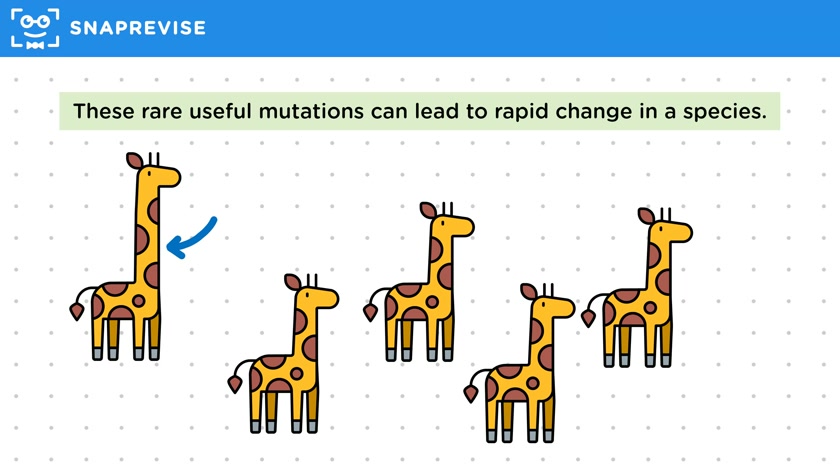
- An example of a beneficial mutation is a longer neck in giraffes, which allows them to access more food from treetops.
- Such mutations can significantly impact the species by enabling rapid evolutionary changes.
- Within a population, only a few individuals might initially exhibit the beneficial mutation.
- Beneficial mutations can spread through a species faster than other phenotypic changes that do not affect survival.
- Evolutionary changes become noticeable in the species over time, rather than suddenly appearing in individuals.
- Mutations are genetic and present from birth, not acquired during an organism's lifetime.
- Organisms with beneficial mutations pass these on to their offspring during reproduction.
- Understanding that rare, useful mutations can lead to rapid species changes is important for exams on the subject.
Please subscribe to access these revision notes.
This, and all other video notes, are included in our premium subscriptions.
Premium accounts get access to all videos and revision notes.
81
questions for Inheritance, Variation and Evolution
40
questions for Variation and Evolution