
GCSE Combined Science (AQA)
622 videos | 38 hours
Please subscribe to watch this video.
This, and all other videos, are included in our premium subscriptions.
Premium accounts get access to all videos.
Enable autoplay to keep watching
Your browser is blocking videos from playing automatically. To turn it back on:
Safari (Mac): Click the Safari menu item in the top bar, then Settings → Websites → Auto-Play, then set Auto-Play to Allow All Auto-Play for the current website.
Safari (iPhone/iPad): open the Settings app, then Apps → Safari → Auto-Play, and select Allow All Auto-Play.
Rate of Blood Flow
- Blood flow is defined as the volume of blood pumped through a blood vessel in a specific period.
- The heart generates blood flow.
- Blood flow rate can be calculated by knowing the volume of blood that flows through a vessel in a set period.
- Common units for blood flow rate include milliliters per minute, liters per minute, milliliters per hour, and liters per hour.
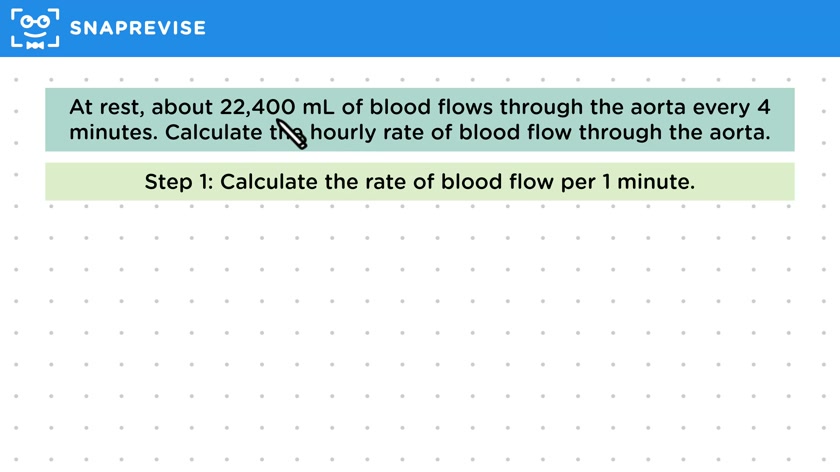
- Example calculation: 22,400 milliliters of blood flows through the aorta every four minutes.
- To find the rate per minute, divide 22,400 milliliters by 4, resulting in 5,600 milliliters per minute.
- To calculate the hourly rate, multiply the per-minute rate (5,600 milliliters) by 60 (minutes in an hour), resulting in 336,000 milliliters per hour or 336 liters per hour.
- It is crucial to pay attention to units when performing calculations related to blood flow rates.
- These calculations are essential for exams, and accurate handling of units is emphasized.
Please subscribe to access these revision notes.
This, and all other video notes, are included in our premium subscriptions.
Premium accounts get access to all videos and revision notes.
55
questions for Organisation
47
questions for Animal Tissues, Organs and Organ Systems