
GCSE Combined Science (AQA)
622 videos | 38 hours
Please subscribe to watch this video.
This, and all other videos, are included in our premium subscriptions.
Premium accounts get access to all videos.
Enable autoplay to keep watching
Your browser is blocking videos from playing automatically. To turn it back on:
Safari (Mac): Click the Safari menu item in the top bar, then Settings → Websites → Auto-Play, then set Auto-Play to Allow All Auto-Play for the current website.
Safari (iPhone/iPad): open the Settings app, then Apps → Safari → Auto-Play, and select Allow All Auto-Play.
Rate of Chemical Reactions
- Enzymes speed up the rate of chemical reactions.
- Rate calculations are essential for understanding how quickly reactions occur.
- The rate of change in reactions is calculated by dividing the amount of substrate used or product made by the time taken.
- Biological washing detergents contain enzymes like lipase to break down fats and oils.
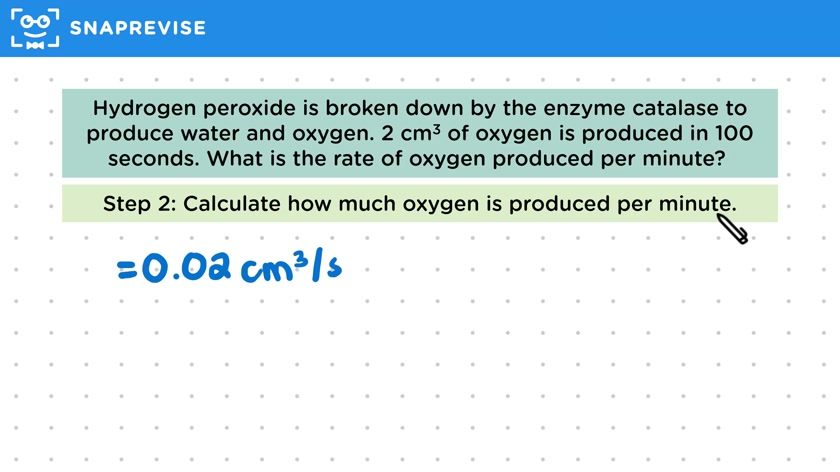
- The breakdown of hydrogen peroxide by the enzyme catalyze produces water and oxygen.
- Example calculation: 2 cm�� of oxygen produced in 100 seconds results in a rate of 0.02 cm�� per second, which equals 1.2 cm�� per minute when multiplied by 60.
- Rate of change can also be determined graphically using the slope of a tangent to the curve on a graph of time versus amount of product.
- The slope of the tangent represents the rate at a specific point and is calculated as vertical change divided by horizontal change.
- Multiple tangents can be used to analyze how the rate changes over time in an experiment.
Please subscribe to access these revision notes.
This, and all other video notes, are included in our premium subscriptions.
Premium accounts get access to all videos and revision notes.
55
questions for Organisation
47
questions for Animal Tissues, Organs and Organ Systems