
GCSE Combined Science (AQA)
622 videos | 38 hours
Please subscribe to watch this video.
This, and all other videos, are included in our premium subscriptions.
Premium accounts get access to all videos.
Enable autoplay to keep watching
Your browser is blocking videos from playing automatically. To turn it back on:
Safari (Mac): Click the Safari menu item in the top bar, then Settings → Websites → Auto-Play, then set Auto-Play to Allow All Auto-Play for the current website.
Safari (iPhone/iPad): open the Settings app, then Apps → Safari → Auto-Play, and select Allow All Auto-Play.
Receptors & Effectors
- Receptors are cells that detect stimuli or changes in the environment.
- These cells receive information and are present in various human sense organs.
- Different body parts contain specific types of receptors:
- Eyes contain light receptors.
- Tongue has chemical receptors.
- Skin detects temperature and touch.
- Ears detect sound.
- Nose contains chemical receptors.
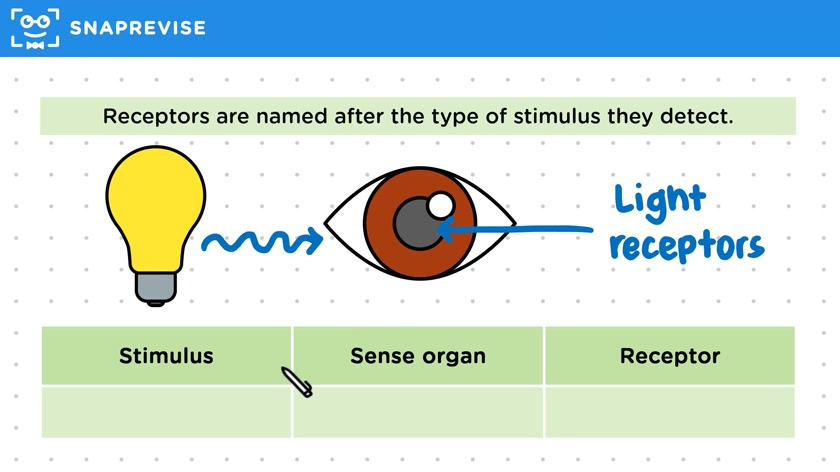
- Receptors are named after the type of stimulus they detect, such as light receptors in the eyes.
- A stimulus is a change in the environment, like light.
- The sense organ (e.g., the eye) detects the stimulus using receptors (e.g., light receptors).
- Light receptors generate an electrical impulse in response to light.
- Effectors are body parts that produce a response to a stimulus and cause an effect.
- There are two types of effectors: muscles and glands.
- Muscles can contract, like biceps lifting a bag.
- Glands produce substances, often liquid, like the adrenal gland producing the hormone adrenaline.
Please subscribe to access these revision notes.
This, and all other video notes, are included in our premium subscriptions.
Premium accounts get access to all videos and revision notes.
95
questions for Homeostasis and Response
12
questions for Homeostasis