
GCSE Combined Science (AQA)
622 videos | 38 hours
Please subscribe to watch this video.
This, and all other videos, are included in our premium subscriptions.
Premium accounts get access to all videos.
Enable autoplay to keep watching
Your browser is blocking videos from playing automatically. To turn it back on:
Safari (Mac): Click the Safari menu item in the top bar, then Settings → Websites → Auto-Play, then set Auto-Play to Allow All Auto-Play for the current website.
Safari (iPhone/iPad): open the Settings app, then Apps → Safari → Auto-Play, and select Allow All Auto-Play.
Rf Values
- Two phases in paper chromatography: stationary phase and mobile phase.
- Stationary phase: chromatography paper.
- Mobile phase: solvent.
- Chromatography paper with a dot of mixture is the stationary phase.
- Solvent moves during the process, carrying substances up the paper.
- Separation depends on distribution between mobile and stationary phases.
- Chromatogram result shows substances separated into spots.
- Substances more attracted to the mobile phase move further up the paper.
- Substances more attracted to the stationary phase move less up the paper.
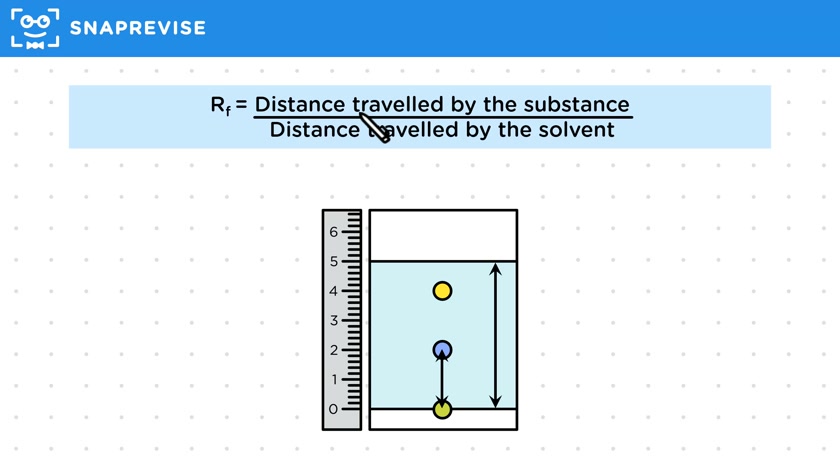
- RF value: ratio of distance moved by a compound to the distance moved by the solvent.
- Measure distances from the pencil line (origin) to the center of the spot.
- RF value calculation: distance traveled by substance divided by distance traveled by solvent.
- RF values are unitless and range between 0 and 1.
- Different compounds have different RF values in different solvents.
- RF values help identify compounds as they are consistent for a given compound in a specific solvent.
- Example calculation: RF value of 0.39 indicates glucose in the given solvent.
Please subscribe to access these revision notes.
This, and all other video notes, are included in our premium subscriptions.
Premium accounts get access to all videos and revision notes.
21
questions for Chemical analysis
17
questions for Purity, formulations and chromatography