
GCSE Combined Science (AQA)
622 videos | 38 hours
Please subscribe to watch this video.
This, and all other videos, are included in our premium subscriptions.
Premium accounts get access to all videos.
Enable autoplay to keep watching
Your browser is blocking videos from playing automatically. To turn it back on:
Safari (Mac): Click the Safari menu item in the top bar, then Settings → Websites → Auto-Play, then set Auto-Play to Allow All Auto-Play for the current website.
Safari (iPhone/iPad): open the Settings app, then Apps → Safari → Auto-Play, and select Allow All Auto-Play.
Risks of Selective Breeding
- Selective breeding can lead to health issues due to prioritizing appearance or utility traits.
- Example given: Pugs suffer from respiratory issues, skin infections, eye prolapse, and hip problems due to selective breeding.
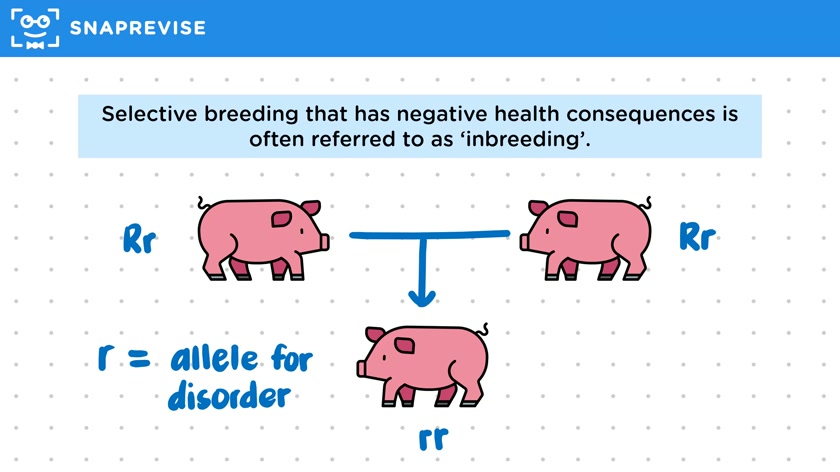
- Selective breeding with negative health impacts is often a result of inbreeding.
- Inbreeding example: Breeding two related pigs with a desirable trait can increase the likelihood of offspring with recessive genetic disorders.
- Inbreeding does not create undesirable genes but increases the probability of these genes manifesting in offspring.
- Ethical concerns arise regarding the limits and implications of selective breeding.
- Selective breeding can also increase susceptibility to infectious diseases.
- Example of bananas: Most are from a few selectively bred varieties, making them vulnerable to epidemics due to genetic uniformity.
Please subscribe to access these revision notes.
This, and all other video notes, are included in our premium subscriptions.
Premium accounts get access to all videos and revision notes.
81
questions for Inheritance, Variation and Evolution
40
questions for Variation and Evolution