
GCSE Combined Science (AQA)
622 videos | 38 hours
Please subscribe to watch this video.
This, and all other videos, are included in our premium subscriptions.
Premium accounts get access to all videos.
Enable autoplay to keep watching
Your browser is blocking videos from playing automatically. To turn it back on:
Safari (Mac): Click the Safari menu item in the top bar, then Settings → Websites → Auto-Play, then set Auto-Play to Allow All Auto-Play for the current website.
Safari (iPhone/iPad): open the Settings app, then Apps → Safari → Auto-Play, and select Allow All Auto-Play.
Studying the Human Genome
- Scientists have determined the DNA sequence of the entire human genome.
- The human body contains 23 pairs of chromosomes.
- Each chromosome in a pair is inherited from one parent: one from the mother and one from the father.
- Understanding the human genome is crucial for the future of medicine.
- Studying the human genome allows for the identification of genes linked to various diseases.
- Researchers can search for alleles, mutations, or flaws in DNA that contribute to diseases like cancer and work towards prevention.
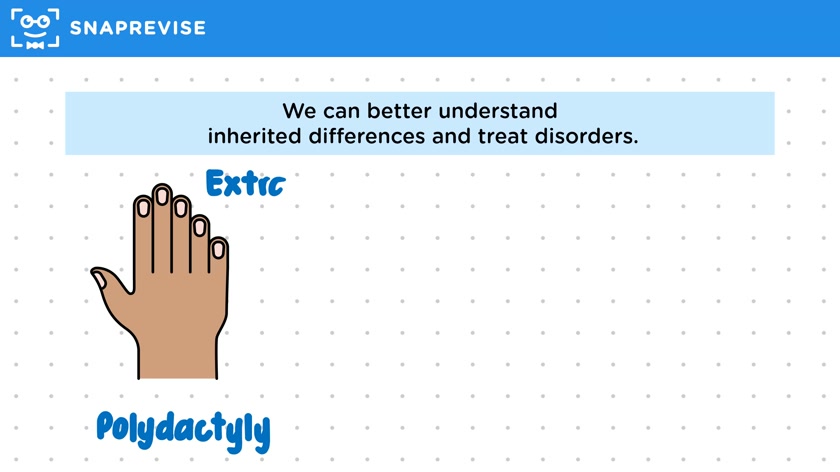
- Understanding the human genome helps in understanding inherited differences and treating disorders.
- Examples of inherited disorders include polydactyly (extra fingers or toes) and cystic fibrosis (lung disorder with airways blocked by sticky mucus).
- Knowledge of the human genome can also help trace human migration patterns from the past.
- Humans originated from Africa over 300,000 years ago and migrated to other parts of the world including the Middle East, Oceania, Europe, Asia, and eventually to North and South America around 12,000 to 20,000 years ago.
- While specific migration patterns are not required for exams, understanding how the human genome helps trace these patterns is important.
Please subscribe to access these revision notes.
This, and all other video notes, are included in our premium subscriptions.
Premium accounts get access to all videos and revision notes.
81
questions for Inheritance, Variation and Evolution
16
questions for Reproduction