
GCSE Combined Science (AQA)
622 videos | 38 hours
Please subscribe to watch this video.
This, and all other videos, are included in our premium subscriptions.
Premium accounts get access to all videos.
Enable autoplay to keep watching
Your browser is blocking videos from playing automatically. To turn it back on:
Safari (Mac): Click the Safari menu item in the top bar, then Settings → Websites → Auto-Play, then set Auto-Play to Allow All Auto-Play for the current website.
Safari (iPhone/iPad): open the Settings app, then Apps → Safari → Auto-Play, and select Allow All Auto-Play.
The Cell Cycle
- Multicellular organisms require cell division for growth, development, repair, and replacement.
- Normal cell division occurs through a process called mitosis.
- Mitosis is crucial for the growth and development of both plants and animals, beginning post-fertilization.
- It is also used to repair damaged tissues and replace old cells, such as constantly shedding and replacing skin cells.
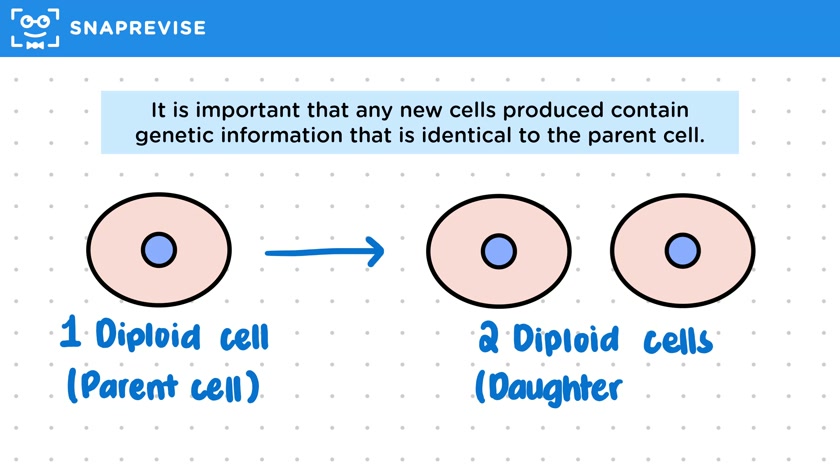
- New cells produced during mitosis contain genetic information identical to the parent cell.
- A single diploid parent cell divides to produce two identical diploid daughter cells.
- Cell division occurs in a series of stages known as the cell cycle, which includes three main stages.
- The cell cycle stages are:
- Interphase: the cell prepares for division and spends most of its life in this stage.
- Mitosis: the cell divides its contents, preparing to split into two.
- Cytokinesis: the final part of the cell cycle where the cell physically splits into two, involving the division of the cytoplasm.
- After cytokinesis, the cell cycle begins anew in the resulting cells.
- For exams, it is important to describe the three stages of the cell cycle, including mitosis.
Please subscribe to access these revision notes.
This, and all other video notes, are included in our premium subscriptions.
Premium accounts get access to all videos and revision notes.
135
questions for Cell Biology
54
questions for Cell Division