
GCSE Combined Science (AQA)
622 videos | 38 hours
Please subscribe to watch this video.
This, and all other videos, are included in our premium subscriptions.
Premium accounts get access to all videos.
Enable autoplay to keep watching
Your browser is blocking videos from playing automatically. To turn it back on:
Safari (Mac): Click the Safari menu item in the top bar, then Settings → Websites → Auto-Play, then set Auto-Play to Allow All Auto-Play for the current website.
Safari (iPhone/iPad): open the Settings app, then Apps → Safari → Auto-Play, and select Allow All Auto-Play.
The Early Atmosphere
- The Earth formed approximately 4.6 billion years ago.
- Initially, the Earth had no oceans and the land was red hot.
- Scientists have limited evidence about the early atmosphere's gases and formation.
- The current atmosphere is mostly oxygen and nitrogen.
- Theories suggest intense volcanic activity in the first billion years released gases forming the early atmosphere.
- Volcanic eruptions released magma with dissolved chemicals, forming volcanic gases.
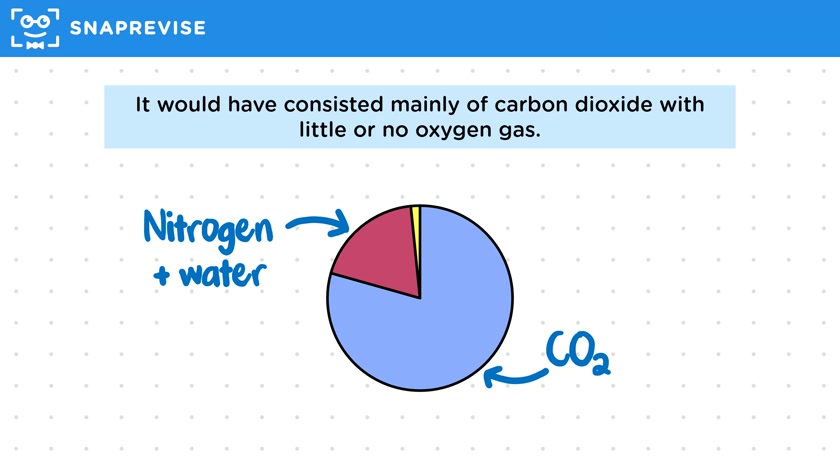
- Early atmosphere likely similar to Mars and Venus, mostly carbon dioxide with little or no oxygen.
- Carbon dioxide made up nearly three-quarters of the early atmosphere, with nitrogen and water making up less than a quarter.
- Volcanoes also produced nitrogen, which built up over time due to its unreactive nature.
- Methane and ammonia were likely present in small proportions.
- Volcanoes released water vapor, which condensed to form oceans.
- Cooling of the Earth allowed water vapor to condense into liquid, forming oceans.
- Oceans dissolved carbon dioxide, reducing its atmospheric levels.
- Soluble carbonate compounds formed from dissolved CO2, precipitating as sediments.
- Precipitation of carbonates led to sedimentary rock formation, trapping CO2 and reducing atmospheric levels.
- This process is a significant reason for the current lower levels of CO2 in the atmosphere.
Please subscribe to access these revision notes.
This, and all other video notes, are included in our premium subscriptions.
Premium accounts get access to all videos and revision notes.
19
questions for Chemistry of the atmosphere
14
questions for The composition and evolution of the Earth's atmosphere