
GCSE Combined Science (AQA)
622 videos | 38 hours
Please subscribe to watch this video.
This, and all other videos, are included in our premium subscriptions.
Premium accounts get access to all videos.
Enable autoplay to keep watching
Your browser is blocking videos from playing automatically. To turn it back on:
Safari (Mac): Click the Safari menu item in the top bar, then Settings → Websites → Auto-Play, then set Auto-Play to Allow All Auto-Play for the current website.
Safari (iPhone/iPad): open the Settings app, then Apps → Safari → Auto-Play, and select Allow All Auto-Play.
The National Grid
- The National Grid efficiently transports electricity from power stations to homes.
- Electricity is transported over distances of hundreds of miles.
- Generators in power stations generate alternating current at 1000 amps and 25,000 volts.
- Energy from various resources creates kinetic energy for an AC generator in power stations.
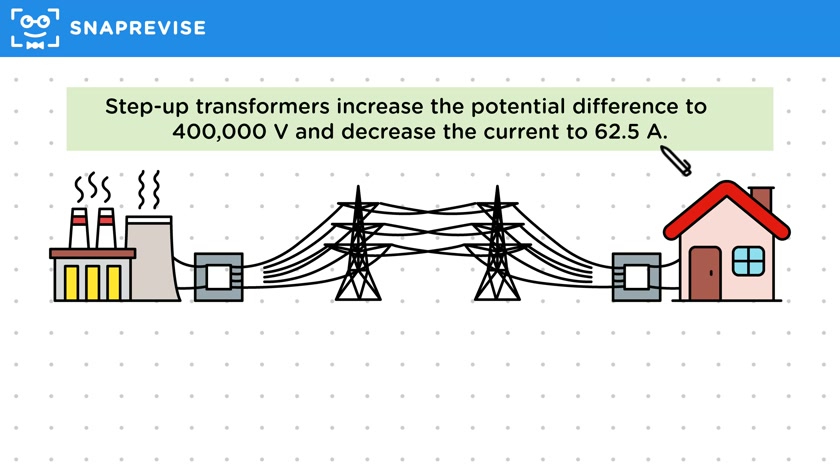
- Step up transformers increase potential difference to 400,000 volts and decrease current to 62.5 amps.
- Transformers change the potential difference of alternating current.
- A step up transformer increases voltage using two coils of wire wrapped around an iron core.
- High potential difference is used for transmission across long overhead cables to reduce energy loss.
- High overhead cables keep the dangerous high potential difference away from people.
- Step down transformers decrease potential difference to 230 volts for safe home use.
- Step down transformers are typically located at relay stations in towns.
Please subscribe to access these revision notes.
This, and all other video notes, are included in our premium subscriptions.
Premium accounts get access to all videos and revision notes.
125
questions for Electricity
28
questions for Energy transfers