
GCSE Combined Science (AQA)
622 videos | 38 hours
Please subscribe to watch this video.
This, and all other videos, are included in our premium subscriptions.
Premium accounts get access to all videos.
Enable autoplay to keep watching
Your browser is blocking videos from playing automatically. To turn it back on:
Safari (Mac): Click the Safari menu item in the top bar, then Settings → Websites → Auto-Play, then set Auto-Play to Allow All Auto-Play for the current website.
Safari (iPhone/iPad): open the Settings app, then Apps → Safari → Auto-Play, and select Allow All Auto-Play.
The Three-Domain System
- The three domain system is a new classification system developed by Carl Woese in the 1970s.
- The system was developed through an increased understanding of cell biochemistry and reproduction.
- Organisms are classified into three domains: Archaea, Bacteria, and Eukarya.
- Each domain is further classified into kingdoms.
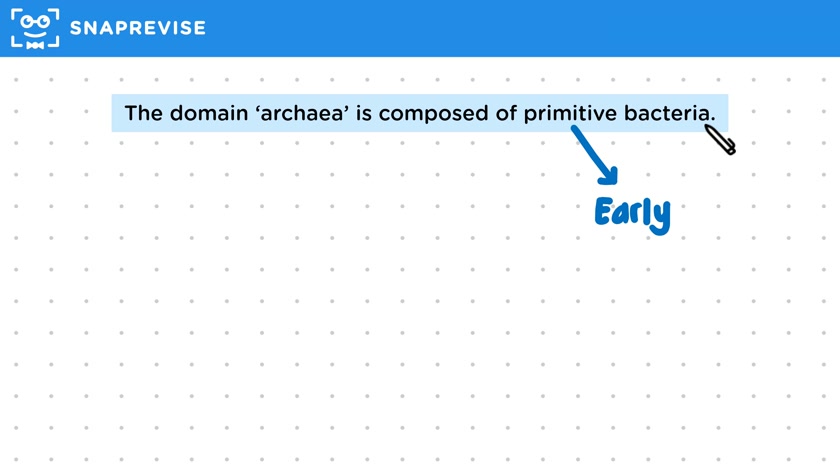
- The domain Archaea consists of primitive bacteria, often referred to as extremophiles, which survive in extreme conditions.
- The domain Bacteria consists of true bacteria, grouped under the kingdom U bacteria.
- The domain Eukarya (referred to as U carota in the transcript) includes organisms with a cell nucleus and is divided into four kingdoms: plants, animals, protists, and fungi.
- Students need to be familiar with the features of each kingdom as part of their exam preparation.
Please subscribe to access these revision notes.
This, and all other video notes, are included in our premium subscriptions.
Premium accounts get access to all videos and revision notes.
81
questions for Inheritance, Variation and Evolution
1
questions for Classification of Living Organisms