
GCSE Combined Science (AQA)
622 videos | 38 hours
Please subscribe to watch this video.
This, and all other videos, are included in our premium subscriptions.
Premium accounts get access to all videos.
Enable autoplay to keep watching
Your browser is blocking videos from playing automatically. To turn it back on:
Safari (Mac): Click the Safari menu item in the top bar, then Settings → Websites → Auto-Play, then set Auto-Play to Allow All Auto-Play for the current website.
Safari (iPhone/iPad): open the Settings app, then Apps → Safari → Auto-Play, and select Allow All Auto-Play.
Thyroxine
- Thyroxine is a hormone produced by the thyroid gland located in the neck.
- The pituitary gland, situated beneath the brain and known as the master gland, stimulates the thyroid gland to produce thyroxine.
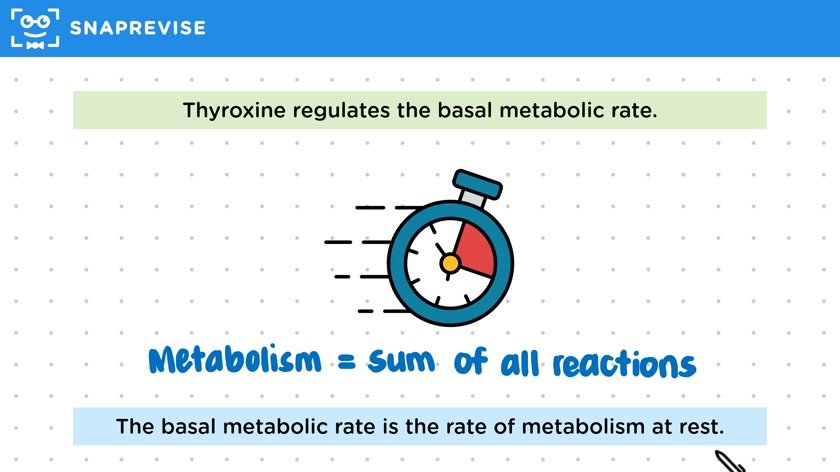
- Thyroxine regulates the basal metabolic rate, which is the rate of metabolism at rest.
- It also plays a crucial role in the growth and development of various tissues and organs, including bones and the brain.
- Thyroxine levels are controlled by a negative feedback mechanism:
- Low thyroxine levels are detected by the brain.
- The pituitary gland then releases thyroid-stimulating hormone (TSH).
- TSH stimulates the thyroid to produce more thyroxine, increasing its levels.
- High levels of thyroxine are detected by the brain, which then inhibits the release of TSH, causing thyroxine levels to decrease.
- This cycle repeats to maintain balanced thyroxine levels.
Please subscribe to access these revision notes.
This, and all other video notes, are included in our premium subscriptions.
Premium accounts get access to all videos and revision notes.
95
questions for Homeostasis and Response
72
questions for Hormonal Coordination in Humans