
GCSE Combined Science (AQA)
622 videos | 38 hours
Please subscribe to watch this video.
This, and all other videos, are included in our premium subscriptions.
Premium accounts get access to all videos.
Enable autoplay to keep watching
Your browser is blocking videos from playing automatically. To turn it back on:
Safari (Mac): Click the Safari menu item in the top bar, then Settings → Websites → Auto-Play, then set Auto-Play to Allow All Auto-Play for the current website.
Safari (iPhone/iPad): open the Settings app, then Apps → Safari → Auto-Play, and select Allow All Auto-Play.
Transverse Waves
- Transverse waves have vibrations at right angles to the direction of wave travel.
- Examples include water waves and all electromagnetic waves.
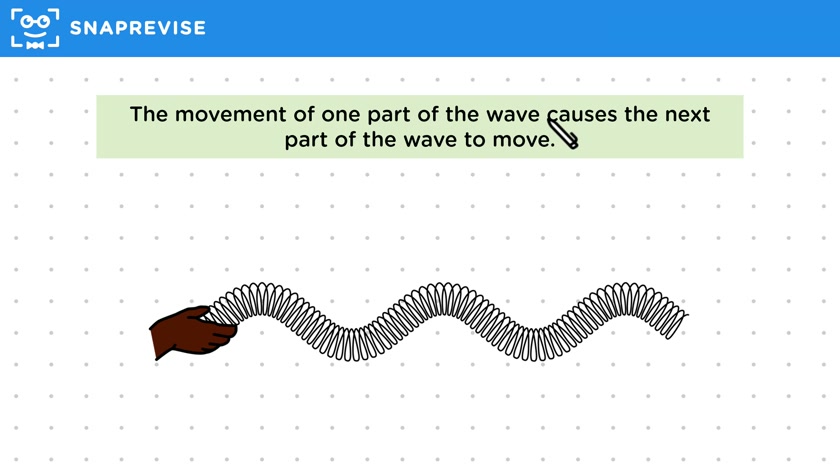
- A demonstration involves moving a spring up and down to create a transverse wave pattern.
- Waves transport energy without transporting matter.
- In a transverse wave, energy is transported in one direction while the medium moves perpendicularly.
- The vibrations in transverse waves are perpendicular to the energy transport direction.
- Longitudinal waves have vibrations parallel to the transport direction.
- Understanding the difference between transverse and longitudinal waves is important for exams.
- Energy moves along a spring as one part of the wave causes the next part to move.
- Coils in a spring are connected, transferring kinetic energy from one to the next.
- The matter transporting the wave does not move along with it.
- In a spring, the matter returns to its original position after the energy passes.
- In water waves, objects like leaves bob up and down but do not move with the wave.
Please subscribe to access these revision notes.
This, and all other video notes, are included in our premium subscriptions.
Premium accounts get access to all videos and revision notes.
82
questions for Waves
38
questions for Waves in air, fluids and solids