
GCSE Combined Science (AQA)
622 videos | 38 hours
Please subscribe to watch this video.
This, and all other videos, are included in our premium subscriptions.
Premium accounts get access to all videos.
Enable autoplay to keep watching
Your browser is blocking videos from playing automatically. To turn it back on:
Safari (Mac): Click the Safari menu item in the top bar, then Settings → Websites → Auto-Play, then set Auto-Play to Allow All Auto-Play for the current website.
Safari (iPhone/iPad): open the Settings app, then Apps → Safari → Auto-Play, and select Allow All Auto-Play.
Using Stem Cells
- Stem cells are utilized in medical research and treatments.
- Embryonic stem cells are potentially more useful than adult stem cells due to their ability to differentiate into any type of cell.
- Embryonic stem cells can differentiate into most types of human cells, whereas adult stem cells have limitations.
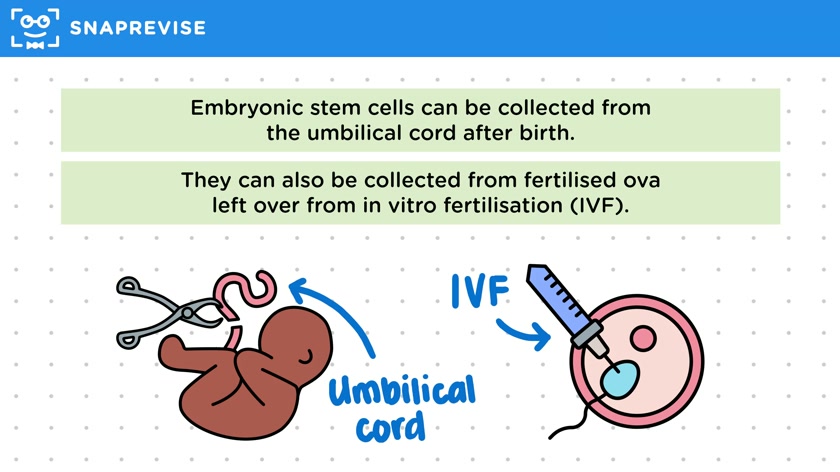
- Embryonic stem cells can be collected from the umbilical cord post-birth or from fertilized eggs leftover from in vitro fertilization (IVF).
- The umbilical cord connects a growing baby to its mother in the womb, providing necessary nutrients.
- IVF is a fertility treatment where eggs are fertilized outside the body and then placed back into the uterus.
- Unused eggs from IVF can be a source of stem cells.
- Stem cell treatments can potentially help conditions like paralysis by differentiating undifferentiated stem cells into nerve cells and implanting them into damaged tissue to restore neural pathways.
- Stem cell treatments might also replace insulin-producing cells in the pancreas to treat diabetes by triggering stem cells to differentiate into pancreatic cells.
- It's important to know the uses and benefits of stem cells for potential exam questions on their role in research and medical treatments.
Please subscribe to access these revision notes.
This, and all other video notes, are included in our premium subscriptions.
Premium accounts get access to all videos and revision notes.
135
questions for Cell Biology
54
questions for Cell Division