
GCSE Combined Science (AQA)
622 videos | 38 hours
Please subscribe to watch this video.
This, and all other videos, are included in our premium subscriptions.
Premium accounts get access to all videos.
Enable autoplay to keep watching
Your browser is blocking videos from playing automatically. To turn it back on:
Safari (Mac): Click the Safari menu item in the top bar, then Settings → Websites → Auto-Play, then set Auto-Play to Allow All Auto-Play for the current website.
Safari (iPhone/iPad): open the Settings app, then Apps → Safari → Auto-Play, and select Allow All Auto-Play.
Visible Light
- Visible light is a range of electromagnetic waves visible to the human eye.
- Electromagnetic waves are transverse waves that carry energy without oscillating matter.
- UV lamps emit ultraviolet waves, which are not visible due to their high frequency.
- Infrared waves are not visible due to their low frequency.
- Visible light from a torch has a frequency that the human eye can process.
- Visible light is necessary for vision; without it, objects cannot be seen.
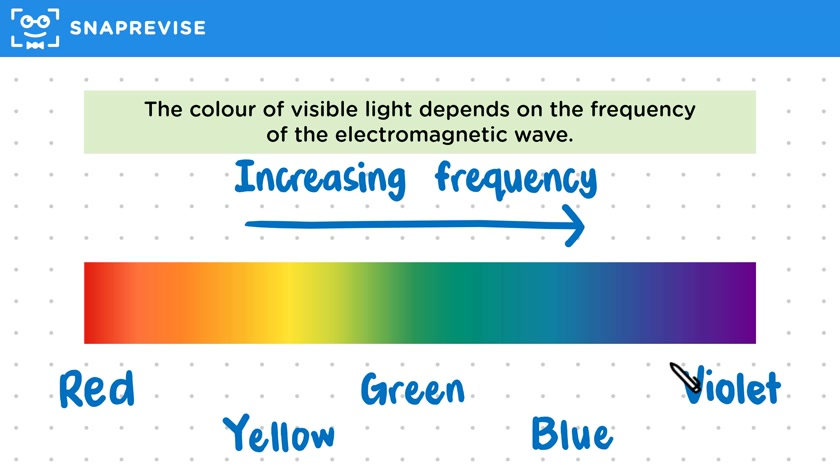
- The color of visible light depends on the frequency of the electromagnetic wave.
- The visible spectrum includes colors like red, yellow, green, blue, and violet.
- Colors like brown and pink are formed by overlapping different waves from the spectrum.
- White light is formed by overlapping all types of visible light; black is the absence of visible light.
- Each color corresponds to an electromagnetic wave of a particular frequency.
- The visible spectrum shows waves of increasing frequency from red to violet.
- Red light has the lowest frequency, and violet light has the highest frequency in the visible spectrum.
- In a vacuum, red light has the longest wavelength, and violet light has the shortest.
- Frequency, not wavelength, affects color; light slowing down doesn't change color.
- The visible spectrum is a small part of the electromagnetic spectrum.
- The electromagnetic spectrum ranges from 10,000 hertz to over a trillion hertz.
- Visible light falls in a small section of the electromagnetic spectrum.
- Infrared waves have frequencies just below red light, and ultraviolet waves have frequencies just above violet light.
- Understanding the position of visible light helps in recalling the arrangement of different waves on the electromagnetic spectrum.
Please subscribe to access these revision notes.
This, and all other video notes, are included in our premium subscriptions.
Premium accounts get access to all videos and revision notes.
82
questions for Waves
44
questions for Electromagnetic waves