
GCSE Combined Science (AQA)
622 videos | 38 hours
Please subscribe to watch this video.
This, and all other videos, are included in our premium subscriptions.
Premium accounts get access to all videos.
Enable autoplay to keep watching
Your browser is blocking videos from playing automatically. To turn it back on:
Safari (Mac): Click the Safari menu item in the top bar, then Settings → Websites → Auto-Play, then set Auto-Play to Allow All Auto-Play for the current website.
Safari (iPhone/iPad): open the Settings app, then Apps → Safari → Auto-Play, and select Allow All Auto-Play.
Waste Water Treatment
- Urban lifestyles and industrial processes produce large amounts of wastewater.
- Wastewater comes from homes (bathrooms and kitchens), agriculture (animal waste), and industries (industrial processes or chemical reactions).
- Wastewater requires treatment before being released into the environment due to harmful pollutants.
- Untreated wastewater can damage ecosystems and harm plants and animals.
- Sewage and agricultural wastewater require removal of organic matter and harmful microbes.
- Wastewater contains harmful bacteria and high levels of nitrogen, disrupting ecosystems.
- Industrial wastewater may contain organic matter and harmful chemicals, including toxic metal compounds.
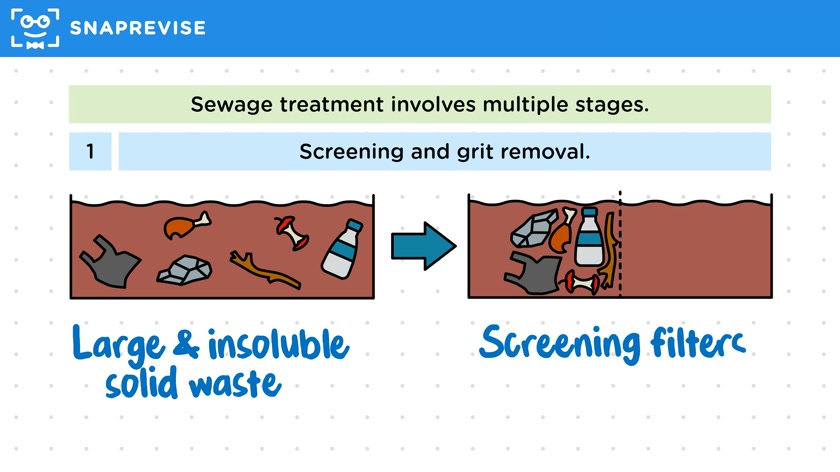
- Sewage treatment involves multiple stages: screening and grit removal, sedimentation, anaerobic digestion of sludge, and aerobic biological treatment of effluent.
- Screening filters out large and insoluble waste.
- Sedimentation allows smaller particles to settle, producing sludge and effluent.
- Anaerobic digestion of sludge involves bacteria breaking down sludge without oxygen.
- Aerobic biological treatment of effluent involves pumping oxygen to allow bacteria to digest remaining waste.
- Distinction between aerobic (with oxygen) and anaerobic (without oxygen) processes is important.
Please subscribe to access these revision notes.
This, and all other video notes, are included in our premium subscriptions.
Premium accounts get access to all videos and revision notes.
4
questions for Using resources
3
questions for Using the Earth's resources and obtaining potable water